WRX Coilovers vs Lowering Springs
One of these is a suspension upgrade. The other is an appearance mod with side effects.
Verdict
Coilovers for a daily driver, if you can stretch to a quality street kit. Lowering springs are a legitimate choice only if closing the arch gap cheaply is the actual goal and you accept a firmer, less controlled ride and shorter damper life.
The difference that matters
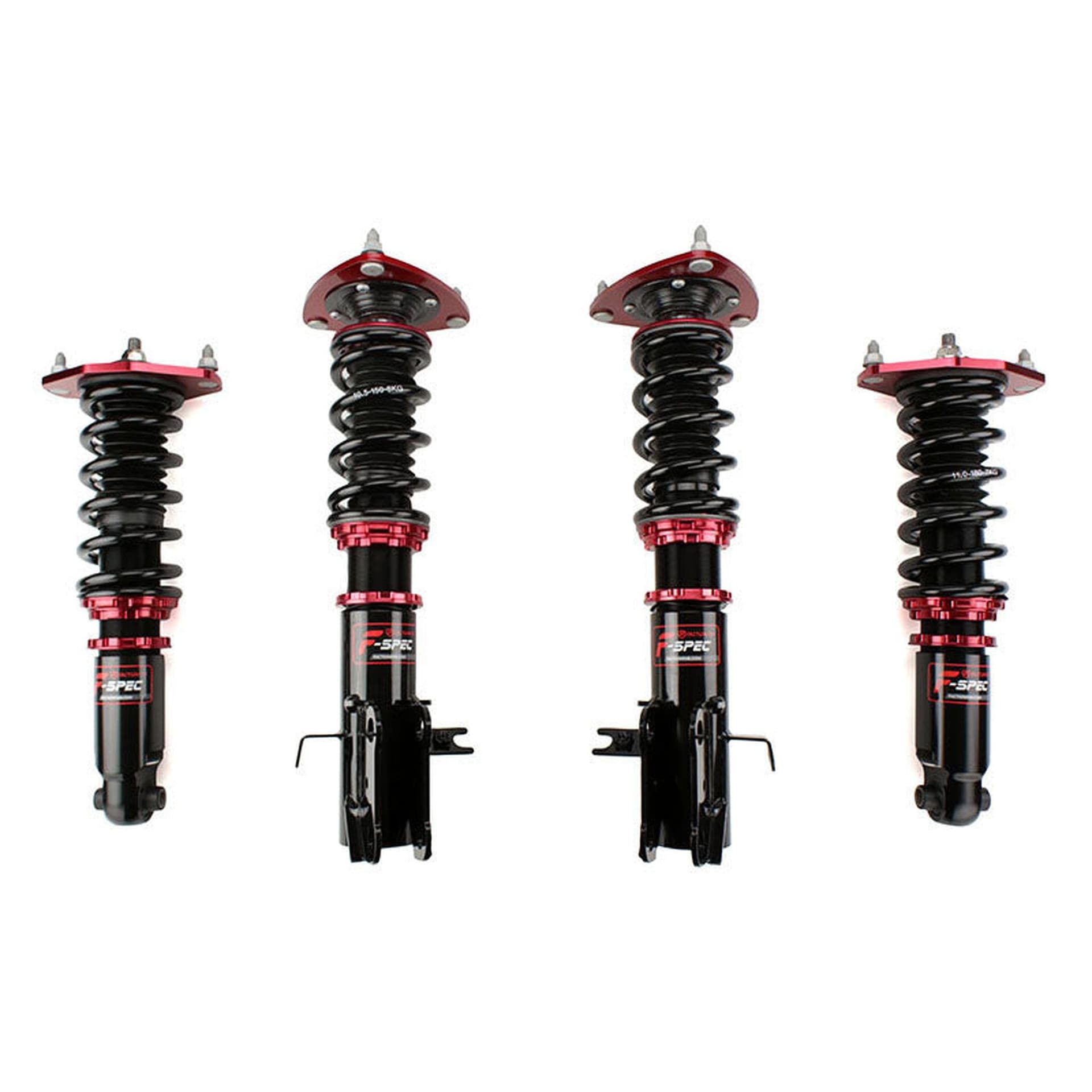
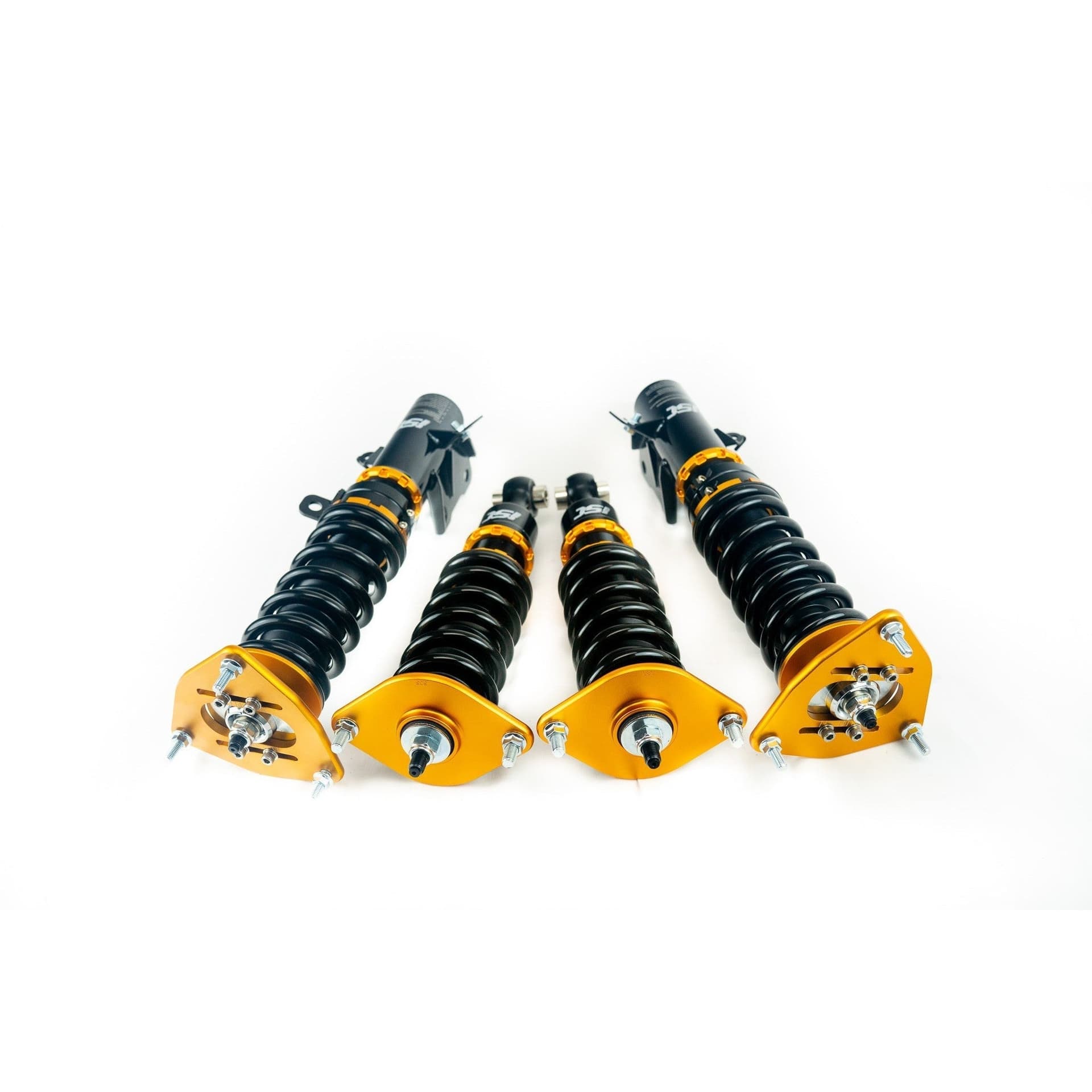
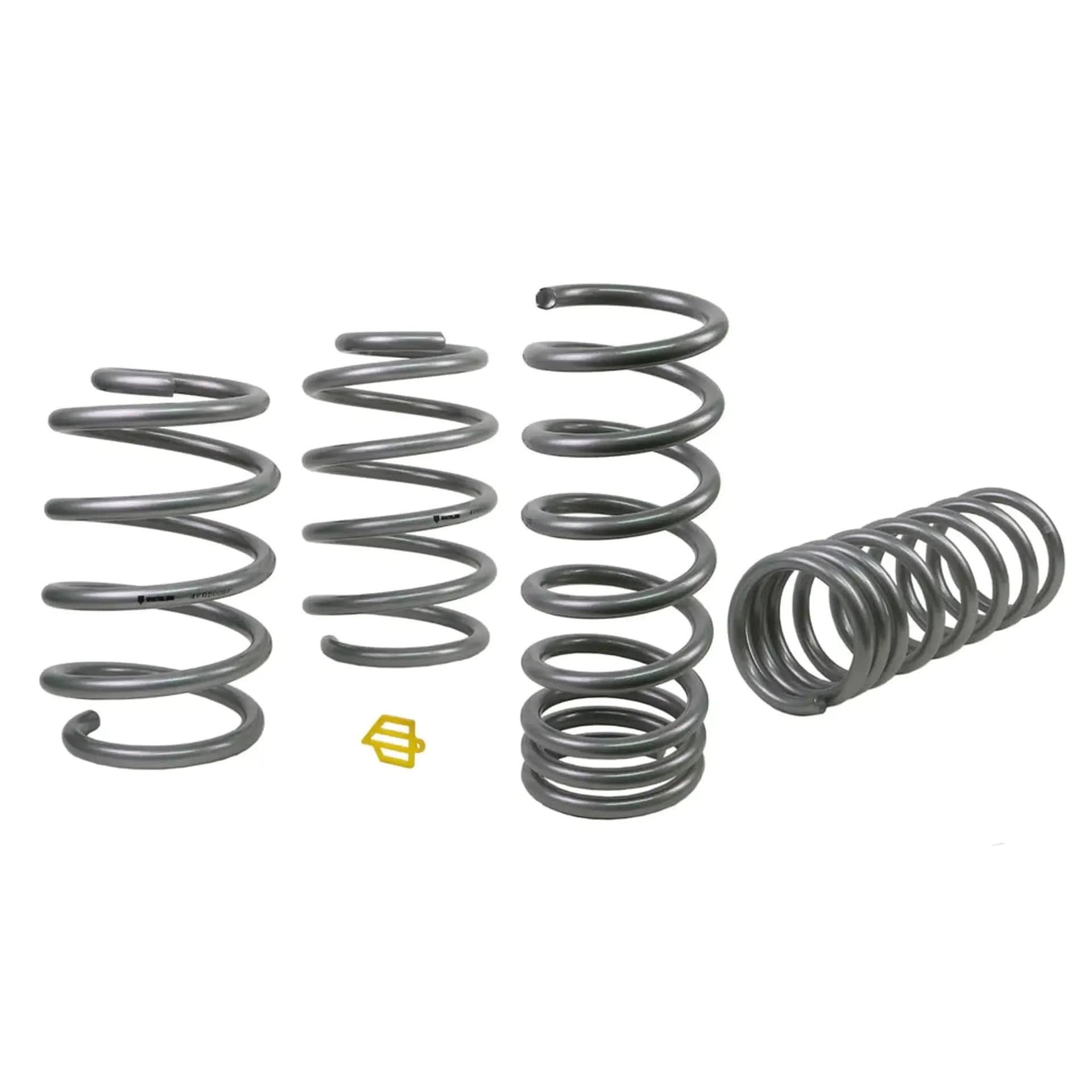
A spring holds the car up. A damper controls how the spring moves. Those are two separate jobs, and understanding that settles most of this debate. Lowering springs replace only the spring. You keep the factory damper, which was valved by Subaru to control the factory spring at the factory ride height. Fit a shorter, stiffer spring and that damper is now controlling something it was not designed for, while operating in a compressed part of its stroke it was not designed to live in. The usual result is a car that looks better and rides worse. Not catastrophically worse, but busier over small bumps, less settled after big ones, and prone to a floaty rebound over crests because the damper cannot control a stiffer spring's energy. Factory dampers on lowering springs also tend to wear out early, which turns a $250 modification into a $250 modification plus a set of struts. Coilovers replace spring and damper as a matched assembly, with ride height adjustment built in. The damper is designed for the spring it comes with. That is the entire reason a good coilover can ride better than lowering springs while sitting lower and controlling body motion far more effectively.
The real cost comparison
Lowering springs run roughly $160 to $360. That is the honest sticker price and the install is straightforward. Coilovers start around $890 to $990 for entry kits, $1,100 to $1,500 for quality street-oriented kits, and beyond $2,000 for premium options. So on paper it is a large gap. But price the likely path rather than the entry point. Lowering springs on factory dampers frequently mean replacing those dampers sooner than you otherwise would. If that happens, you have bought springs, then struts, and you still do not have height adjustment or matched valving. A meaningful number of owners fit springs, live with the ride for a year, and then buy coilovers anyway - at which point the springs were a $300 detour. The honest framing: if you are confident that lowering springs are your final suspension answer, they are cheap and they work. If you suspect you will want more later, going straight to coilovers is cheaper than arriving there in two steps. Also worth noting: neither option requires a tune, neither affects the powertrain, and both are fully reversible if you keep the factory parts.
Related Questions
Community FAQ
suspension
Do I need an alignment after installing lowering springs or coilovers?
Yes, always, and wait for the suspension to settle first. Lowering changes camber and toe by design, and skipping the alignment will destroy a set of tires faster than the springs cost.
Read answer →
wheels / tires
What wheel and tire specs fit best on the VB?
18x9.5 +38 on 255/35 is the proven baseline at or near stock height. Lower the car, go taller or wider, or pick a tire that runs wide, and rubbing at the rear flare becomes likely.
Read answer →
warranty
Will mods void my warranty?
Not automatically - that is not how it works. But a tune or any power modification makes a powertrain claim much harder, and the ECU records reflashes even after you return to stock.
Read answer →
beginner mods
What are the best first mods for a stock WRX VB?
Tires, shifter bushings and a rear sway bar. Under a thousand dollars including tires, no tune required, and they improve things you experience on every single drive.
Continue reading
Related Guides
suspension
WRX Suspension Guide
Sway bars change how the car behaves. Springs change how it looks. Know which one you actually want.
Read guide →
wheels
WRX Wheel Fitment Guide
Stock specs, the community baseline, and how offset actually changes where the wheel sits.
Read guide →
wheels
Best Tires for the 2022+ WRX
The cheapest way to make a VB genuinely faster, and the one upgrade that works on every road.
Read guide →