WRX BaseAdd Build
Mods
Guides
Builds
Community
Planner
Add Your Build
Sign inSign up

WRX Base © 2026

AboutContactTikTokEditorial PolicyCorrectionsPrivacy PolicyUser Agreement

Tracked prices are not retailer-controlled.

This website provides informational content only. Automotive modifications may affect vehicle safety, reliability, emissions compliance, and warranty status. Always consult a qualified professional before modifying your vehicle.

WRX Base is an independent community resource and is not affiliated with, endorsed by, or sponsored by Subaru.

  1. WRX Base
  2. ›
  3. Decide
  4. ›
  5. WRX Winter Setup Guide
Wheels

WRX Winter Setup Guide

All-wheel drive helps you go. Winter tires are what let you stop and turn.

Updated Aug 20, 2026·8 min read·Reviewed by WRX Base Editorial·8 related mods

Verdict

Buy winter tires if you see real snow and ice - all-wheel drive does nothing for braking or cornering. Run them on a dedicated narrower wheel set, size at or slightly below stock width, and keep the car near stock ride height through winter.

All-wheel drive is only one third of the problem

Driving a car involves three things: accelerating, braking and turning. All-wheel drive helps with exactly one of them. This is the single most important thing to understand about winter in a WRX. The symmetrical all-wheel drive system is genuinely good and it will pull you away from a stop in conditions that strand front-drive hatchbacks. It does nothing whatsoever for your stopping distance and nothing for your ability to turn. The practical danger is that this creates false confidence. A VB on summer or worn all-season tires will accelerate up a snowy road with complete composure, right up until the driver needs to stop at the top of it. Every winter, owners of all-wheel drive cars discover the difference between traction and grip in the least convenient way possible. Winter tires fix the other two thirds. Their compound stays pliable well below freezing where summer and all-season compounds go hard, and their tread pattern is designed to bite into snow and clear slush. The difference in braking distance on a cold road is not marginal - it is the difference between stopping and not.

Heads up

Summer compound loses grip dramatically below roughly 45F, and this applies on dry roads as well as snow. If your VB wears summer tires and you live somewhere with genuine winters, the swap is a safety item rather than a performance preference. Swap based on sustained temperature, not on whether snow has fallen yet.

What to do next

Compare these mods

Browse Wheels mods with pricing and compatibility notes.

See builds running this setup

Community-verified builds you can reference.

Add to planner

Sequence and budget this alongside your other mods.

Related Questions

Community FAQ

wheels / tires

What wheel and tire specs fit best on the VB?

18x9.5 +38 on 255/35 is the proven baseline at or near stock height. Lower the car, go taller or wider, or pick a tire that runs wide, and rubbing at the rear flare becomes likely.

Read answer →

reliability

How warm should my WRX be before I get into boost?

Wait for oil temperature, not coolant. Coolant comes up fast and lies to you; oil takes considerably longer. Drive gently until oil is around 180F, then use the car normally.

Read answer →

reliability

How often should I change the oil in a stock or tuned 2022+ WRX?

Subaru's guidance is around 6,000 miles or 6 months. Stock and gently driven, follow it. Tuned, tracked, or driven hard, halve it - roughly 3,000 miles is the sensible interval.

Read answer →

beginner mods

What are the best first mods for a stock WRX VB?

Tires, shifter bushings and a rear sway bar. Under a thousand dollars including tires, no tune required, and they improve things you experience on every single drive.

Continue reading

Related Guides

Wheels

Best Tires for the 2022+ WRX

The cheapest way to make a VB genuinely faster, and the one upgrade that works on every road.

Read guide →

Wheels

WRX Wheel Fitment Guide

Stock specs, the community baseline, and how offset actually changes where the wheel sits.

Read guide →

Beginner

Best Daily Driver Mods

The practical WRX VB mod path for better feel, sound, grip, comfort, and usability without ruining daily drivability.

Read guide →

Last updated Aug 20, 2026 · Reviewed by WRX Base Editorial · See a mistake? File a correction →

Winter tires, all-seasons, or nothing

Three honest positions, depending on where you live. If you see real snow and ice regularly, buy dedicated winter tires. Nothing substitutes, and no all-season matches a proper winter compound below freezing. This is not an upgrade, it is the correct equipment for the conditions. If you get occasional cold and rare snow, a quality all-season is a reasonable single-set answer. Modern all-seasons are far better than their reputation, and running one set avoids the storage and swapping hassle. Accept that they are a compromise at both ends of the temperature range. If your winters are mild and you never see snow, summer tires with an eye on the forecast are fine, and you get the full benefit of the compound for most of the year. One rule that is not negotiable in any of those cases: fit tires as a set of four. Mixing winter tires on one axle and something else on the other creates wildly unbalanced grip, and on an all-wheel drive car with a centre differential, meaningfully different rolling diameters between axles put continuous load through the drivetrain. Four matching tires, always.

Sizing a winter setup

The instinct is to run your existing wheels and just change tires. There is a better approach. A dedicated winter wheel set saves you from mounting and balancing tires twice a year, which costs money and risks damaging wheels every time. A cheap set of wheels pays for itself in a couple of seasons, and it keeps your good wheels out of the salt entirely. Go narrower rather than wider for winter. This is counterintuitive if you are used to chasing grip with width, but in snow a narrower tire concentrates the car's weight over a smaller contact patch, which helps it cut down to the surface rather than float on top. Staying at the factory 245 width, or dropping slightly below it, is generally better in snow than the 255 or 265 you might run in summer. Smaller diameter wheels with taller sidewalls are also worth considering. More sidewall means more compliance over frozen ruts and potholes, and a cheaper wheel to damage. If you run 18s in summer, a 17-inch winter setup is a common and sensible move where the brakes allow it. Keep the same overall rolling diameter as close to stock as you can, so speedometer accuracy and all-wheel drive behaviour stay correct.

Winter setup building blocks

Quick decision

What does your winter actually look like?

Ground clearance and lowered cars

This is where winter and the rest of the modification world collide. A lowered VB in deep snow is genuinely worse, not just cosmetically compromised. Reduced clearance means the front bumper and underbody start pushing snow rather than passing over it, which costs traction and can beach the car in conditions a stock-height example would handle without noticing. Packed snow ridges at driveway entrances and unploughed side streets are where this bites. If you run coilovers, raising the car back toward stock height for the season is a genuinely good move, and one of the underrated practical advantages coilovers have over lowering springs. It takes an afternoon and it transforms winter usability. If you are on lowering springs, you are committed to that height until you change the springs, which is worth thinking about before you buy them if you live somewhere with real winters. Splitters, lips and other low-hanging aero are also worth removing for the season unless you enjoy replacing them. Snow banks are unforgiving and they are exactly at bumper height.

Tip

If your roads are salted, wash the underside of the car regularly through winter, not just the paint. Salt is what turns a young car into a rusty one, and the underbody and suspension components are where it does the damage you do not see until much later.

The rest of winter ownership

A few things that matter in cold weather beyond tires. Warm-up takes considerably longer in the cold, and oil temperature lags coolant temperature by a lot. In genuine cold it can take twenty minutes of gentle driving before the oil is properly up to temperature, and short winter trips may mean it never gets there. That is why cold-climate short-trip driving counts as severe service - shorten your oil interval accordingly. Tire pressures drop with temperature, roughly one psi for every ten degrees F. Check them more often through winter, because a set that was correct in October is meaningfully low by January. If you run a flex fuel setup, be aware that E85 blends vary seasonally and winter blends contain less ethanol. A flex fuel sensor handles this automatically, which is exactly why the sensor is worth having rather than a fixed ethanol map. And the cold start on an FA24 is loud even stock, and louder still in freezing temperatures with an aftermarket exhaust. Winter mornings are when that decision either feels fine or feels like a mistake.

Pre-purchase checks for this mod

  • 1Fit winter tires as a set of four, never two
  • 2Consider a narrower winter size than your summer setup for snow performance
  • 3Use a dedicated wheel set so you are not remounting tires twice a year
  • 4Swap over based on temperature, not snowfall - around 45F is the threshold
  • 5Avoid lowering the car if you drive through real winters
  • 6Check tire pressures more often; cold air drops pressure meaningfully
  • 7Wash the underside regularly if your roads are salted

Jump To

All-wheel drive is only one third of the problemWinter tires, all-seasons, or nothingSizing a winter setupWinter setup building blocksGround clearance and lowered carsThe rest of winter ownership

Read answer →

wheels / tires

Can I drive a WRX on the factory summer tires in winter?

No, not safely. Summer compound goes hard below roughly 45F and loses grip on dry roads as well as snow. All-wheel drive helps you accelerate and does nothing at all for braking or cornering.

Read answer →

Community FAQ

What wheel and tire specs fit best on the VB?

18x9.5 +38 on 255/35 is the proven baseline at or near stock height. Lower the car, go taller or wider, or pick a tire that runs wide, and rubbing at the rear flare becomes likely.

Read answer →
FeatureCosmis Wheels XT-206R Gloss White 18x9.5 +38 5x114.3Yokohama Advan Sport A/S+ Tire 245/40R18 97YYokohama Advan Sport A/S+ Tire 245/45R18 100WPerrin 3mm Wheel Spacers (One Pair) STI 04-21 / WRX 02-26 / BRZ 13-26
Price range$304$193$187$112 – $140
Requires tune?NoNoNoNo
Daily-friendlyYes - dedicated winter setAll-season, stock sizeAll-season, taller sidewallYes - fitment tweak
Cosmis Wheels XT-206R Gloss White 18x9.5 +38 5x114.3 | | Nissan
Cheap dedicated winter set

Cosmis Wheels

Cosmis Wheels XT-206R Gloss White 18x9.5 +38 5x114.3 | | Nissan

Tracked current price

$304.00

checked Nov 28

View at Import Image RacingSee full mod page →
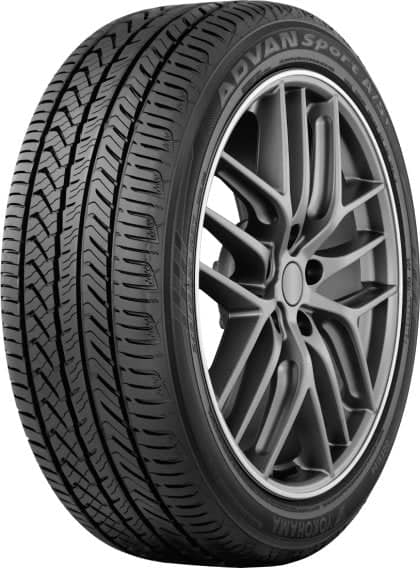
Yokohama Advan Sport A/S+ Tire 245/40R18 97Y
All-season compromise option

Yokohama

Yokohama Advan Sport A/S+ Tire 245/40R18 97Y

Tracked current price

$192.99

checked Nov 26

View at SubimodsSee full mod page →
Perrin 3mm Wheel Spacers (One Pair) STI 04-21 / WRX 02-26 / BRZ 13-26 | PSP-WHL-103BK
Fine-tune winter wheel fit

Perrin

Perrin 3mm Wheel Spacers (One Pair) STI 04-21 / WRX 02-26 / BRZ 13-26 | PSP-WHL-103BK

Last tracked price

$112.00

last checked Nov 21

View at Import Image RacingSee full mod page →

Pricing tracked independently.