WRX BaseAdd Build
Mods
Guides
Builds
Community
Planner
Add Your Build
Sign inSign up

WRX Base © 2026

AboutContactTikTokEditorial PolicyCorrectionsPrivacy PolicyUser Agreement

Tracked prices are not retailer-controlled.

This website provides informational content only. Automotive modifications may affect vehicle safety, reliability, emissions compliance, and warranty status. Always consult a qualified professional before modifying your vehicle.

WRX Base is an independent community resource and is not affiliated with, endorsed by, or sponsored by Subaru.

  1. WRX Base
  2. ›
  3. Decide
  4. ›
  5. First Power Mods for the 2022+ WRX
beginner

First Power Mods for the 2022+ WRX

The dependency chain behind a VB build, and what doing it out of order actually costs you.

Updated Aug 20, 2026·8 min read·Reviewed by WRX Base Editorial·11 related mods

Verdict

The tune comes before airflow, always: buy the tuning device first, then batch every airflow change together and tune once at the end rather than paying for a session after each part.

The one rule that sets the order

Tune before airflow. Every sequencing decision on this platform falls out of that single rule. The FA24 runs a mass airflow based fueling strategy, and the factory ECU decides how much fuel to inject from what the MAF sensor reports. Change the airflow path and you change what that sensor sees. If the tune has not been updated to match, the car fuels wrong - and on the VB specifically, testing has shown aftermarket intakes with larger MAF housings pushing air/fuel ratios toward 12:1 at the top of the rev range on the factory map. That is the lean side, and lean is the direction that damages engines. So the tune is not the reward at the end of a build. It is the foundation underneath it. A stock VB with a tune is a good car. A modified VB without one is a worse car than stock and occasionally a broken one.

Heads up

The single most expensive sequencing mistake is installing an intake, driving on the stock map, and planning to tune later. It is not a gradual build - it is running the engine lean under boost for however long later takes to arrive. If the intake is on the car, the matching tune goes on the same day.
View source

What to do next

Compare these mods

Browse beginner mods with pricing and compatibility notes.

See builds running this setup

Community-verified builds you can reference.

Add to planner

Sequence and budget this alongside your other mods.

Related Questions

Community FAQ

tuning

Do I need a tune for an intake system on the VB?

It depends on the exact intake and calibration. Some VB products are manufacturer-validated for the stock calibration, while others require or include a matching map. Follow the intake maker's instructions and confirm the full hardware, fuel, and tune combination.

Read answer →

tuning

Is an Accessport/tune worth it on a mostly stock VB?

Yes, if you are past warranty concerns. It is the single best value modification on the platform - roughly 35 wheel horsepower and a 48 percent torque increase, which no bolt-on comes close to.

Read answer →

warranty

Will mods void my warranty?

Not automatically - that is not how it works. But a tune or any power modification makes a powertrain claim much harder, and the ECU records reflashes even after you return to stock.

Read answer →

reliability

How should I break in a new VB, and should I change the oil at 1,000 miles?

Continue reading

Related Guides

beginner

Cheapest Ways to Make Power on the 2022+ WRX

Ranked by dollars per wheel horsepower, not by what looks good in the mod list.

Read guide →

beginner

WRX Build Path by Budget

Four complete shopping lists for the VB, with real prices and nothing padded to hit a number.

Read guide →

beginner

WRX VB Mod Path Guide

A practical sequence for building a better WRX VB without buying random parts first.

Read guide →

Last updated Aug 20, 2026 · Reviewed by WRX Base Editorial · See a mistake? File a correction →

Order-dependent parts versus order-free parts

Split every part you are considering into two buckets. This is the whole framework. Order-dependent parts change what the ECU measures or how much fuel the engine needs. Intakes, downpipes, flex fuel systems and anything that alters the MAF reading or the exhaust backpressure all land here. Each one requires a tune that knows about it, and each one installed separately means another tuning session. Order-free parts do not change the fueling model. An intercooler lowers charge temperatures without changing measured airflow. A catback sits behind the turbo and the catalyst and alters sound far more than flow. A charge pipe, a pitch stop mount, shifter bushings - none of these require the ECU to know they exist. Install them whenever the money or the mood arrives, before or after the tune, in any order. The practical consequence: you only have to think hard about sequencing for three or four parts. Everything else is free to slot in wherever.

The correct sequence, step by step

Step one is a baseline. Run the car on the fuel you intend to keep using - 91 or 93, consistently - and drive it for a few tanks. You want to know what the car feels like and you want clean data to compare against. This step costs nothing and people skip it constantly. Step two is the tuning device and a map. Nothing else. Free off-the-shelf maps ship with the device and are genuinely well developed for the VB; a paid off-the-shelf map at around $150 from a VB-focused tuner is sharper if you want the part-throttle behaviour dialled in. Drive it for a month. This is roughly 35 wheel horsepower and 105 lb-ft, and a meaningful fraction of owners discover here that they are finished. Step three is the fork. Either you go the ethanol route - flex fuel sensor kit and a flex fuel tune - or you go the airflow route with intake and downpipe. Ethanol is the cheaper path to more power if E85 is available near you. Airflow is the path if it is not. Step four, whichever fork you took, is one install window. Fit every order-dependent part you intend to own, then tune once at the end. Step five is cooling, and it happens whenever you like. An intercooler does not need the tune to know about it.

Order-dependent parts, in the sequence they belong

Why batching saves real money

A custom tune or e-tune runs $400 to $650, and a flex fuel tune runs around $575. Those are per-session costs, and a session is needed every time the airflow model changes. Install an intake in March and tune it. Install a downpipe in July and tune it again. Add a flex fuel kit in October and tune a third time. You have spent $1,200 to $1,800 on tuning for a car that needed roughly $575 worth if the parts had gone on together. That is a downpipe's worth of money spent on nothing but repeat labour. The counter-argument is that batching means a longer wait and a bigger single invoice, and that is true. But the wait is the point - it forces you to decide what the finished car is before you start buying, which is the discipline that keeps VB builds from sprawling. One genuine exception: if you are stretching a build over years rather than months, tune after each part rather than running mismatched hardware. Paying twice beats running lean.

Quick decision

Where are you in the chain right now?

The four sequencing mistakes

Buying the exhaust first. It is the loudest change for the money and the most visible in a photo, which is exactly why it gets bought first and why it disappoints. A catback on a stock-turbo VB is a sound modification. It does not start the power chain, it does not unlock anything downstream, and it commits you to living with whatever drone it produces on your commute. Buying an intake before the tuning device. Covered above, and it is the one that costs engines rather than money. Chasing peak power past the drivetrain limit. Tuners generally hold torque around 350 lb-ft to keep the factory gearbox healthy, and a Stage 2 ethanol car is already sitting at that figure. Building past it without addressing the transmission moves your failure point from the engine to the gearbox. Tuning around a problem instead of fixing it. If the car has a boost leak, a tired plug set or a fuelling fault, a tune written on top of that is a tune written around a fault. Fix the car, then tune it.

Source

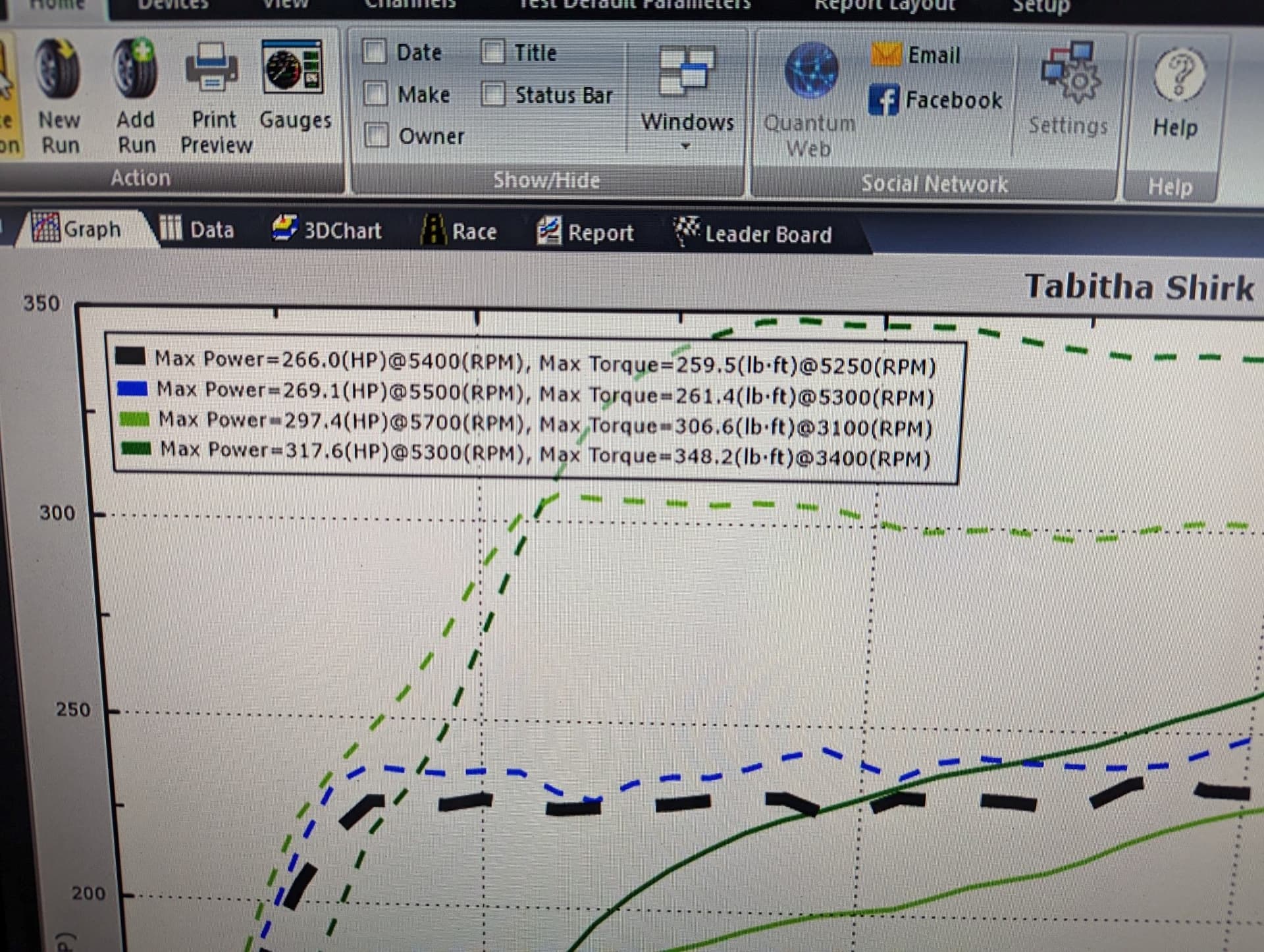
For scale on what the sequence buys: a Dyno Dynamics ladder on the FA24 measured 225.3 whp stock, 260.6 whp at Stage 1 on 93 octane, 289.4 whp at Stage 1 on E85, and 320.0 whp at Stage 2 on E85 - with the stock transmission torque ceiling cited at roughly 350 lb-ft.
View source

Where the chain ends

The stock turbo is comfortable into the low 300s at the wheels on ethanol, and the stock gearbox is the binding constraint not long after. Those two limits define the end of the sequence described here. Past that point the chain restarts and gets expensive: a turbo drags injectors and a high pressure fuel pump behind it, higher torque drags a clutch, and sustained higher torque drags a transmission. That is a different build with a different budget, and it is worth being honest with yourself about whether you want it before you start down the airflow fork. For most owners the honest end of the road is step three. Tuned, on good fuel, on good tires, with an intercooler so the fourth pull is as quick as the first. That car is fast, reliable, and finished - and finished is a legitimate goal.

Pre-purchase checks for this mod

  • 1Establish a baseline on the stock map before changing anything
  • 2Buy the tuning device before any part that changes airflow
  • 3Group intake, downpipe and fuel system changes into one install window
  • 4Book the retune for after the last airflow part is on the car, not between parts
  • 5Confirm each intake's MAF housing diameter before ordering
  • 6Keep the stock downpipe and airbox for warranty visits and resale
  • 7Re-log the car after every tune change to confirm trims settled

Jump To

The one rule that sets the orderOrder-dependent parts versus order-free partsThe correct sequence, step by stepOrder-dependent parts, in the sequence they belongWhy batching saves real moneyThe four sequencing mistakesWhere the chain ends

Follow Subaru's first 1,000 miles guidance - vary speed and load, stay under 4,000 rpm. An early oil change is optional and very common; it is cheap insurance rather than a requirement.

Read answer →

Community FAQ

Do I need a tune for an intake system on the VB?

It depends on the exact intake and calibration. Some VB products are manufacturer-validated for the stock calibration, while others require or include a matching map. Follow the intake maker's instructions and confirm the full hardware, fuel, and tune combination.

Read answer →
COBB Accessport
Foundation, not reward

COBB Accessport

COBB

$770

See mod →

FeatureCOBB AccessportAMS Performance Cold Air Intake Wrinkle BlackPLM Power Driven + WRX Catted J-Pipe Downpipe
Price range$770$400$750
Requires tune?It is the tuneYesYes
Daily-friendlyYesYesYes - check local law
COBB Accessport
Step one, no exceptions

COBB

COBB Accessport

Tracked current price

$770.00

checked Oct 10

Used in 5 builds

View at MAPerformanceSee full mod page →
Drunkmann Tuning Stock-Intake OTS Map WRX 2022-2026 6MT
Right map before hardware

Drunkmann Tuning

Drunkmann Tuning Stock-Intake OTS Map WRX 2022-2026 6MT

Tracked current price

$150.00

checked Oct 11

View at Felix PerformanceSee full mod page →
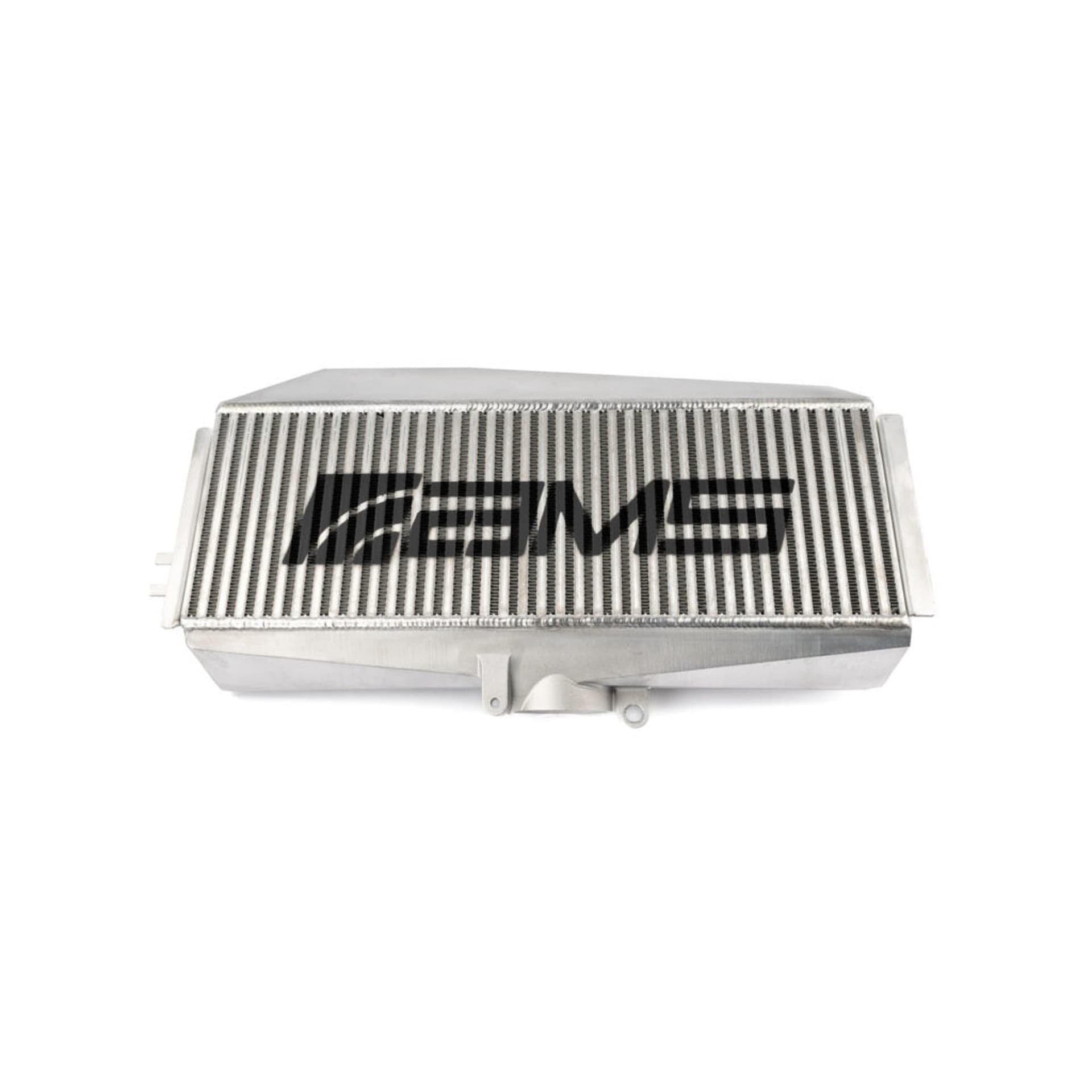
AMS Performance Top Mount Intercooler WRX 2022+
Install whenever you like

AMS Performance

AMS Performance Top Mount Intercooler WRX 2022+

Last tracked price

$749.95

last checked Oct 2

View at Import Image RacingSee full mod page →

Pricing tracked independently.