WRX BaseAdd Build
Mods
Guides
Builds
Community
Planner
Add Your Build
Sign inSign up

WRX Base © 2026

AboutContactTikTokEditorial PolicyCorrectionsPrivacy PolicyUser Agreement

Tracked prices are not retailer-controlled.

This website provides informational content only. Automotive modifications may affect vehicle safety, reliability, emissions compliance, and warranty status. Always consult a qualified professional before modifying your vehicle.

WRX Base is an independent community resource and is not affiliated with, endorsed by, or sponsored by Subaru.

  1. WRX Base
  2. ›
  3. Decide
  4. ›
  5. Cheapest Ways to Make Power on the 2022+ WRX
Beginner

Cheapest Ways to Make Power on the 2022+ WRX

Ranked by dollars per wheel horsepower, not by what looks good in the mod list.

Updated Oct 22, 2026·8 min read·Reviewed by WRX Base Editorial·7 related mods

Verdict

Buy the Accessport and run an off-the-shelf map first - roughly 35 wheel horsepower for about $22 per horsepower, the best value on the platform by a wide margin. Ethanol is second. Every bolt-on is a distant third.

The short answer

Rank VB power mods by dollars per wheel horsepower and the list barely resembles the one people post in build threads. A tuning device and an off-the-shelf map returns roughly 35 wheel horsepower and a massive 105 lb-ft of torque for about $770 Accessport regular-price example (checked October 21, 2026; promotions vary). That is around $22 per horsepower, and the torque figure is the part that actually changes how the car drives. Nothing else on the platform comes close. Second place is ethanol. A flex fuel sensor kit and a tune to use it adds roughly another 29 wheel horsepower on top of a tuned car - call it $35 per horsepower, and it stacks on top of the tune rather than replacing it. Everything else is third place or worse. An intake, a catback, and a set of cosmetic engine bay parts can easily total $1,500 and return less power than the $770 Accessport regular-price example (checked October 21, 2026; promotions vary) tuning device did on its own.

Source

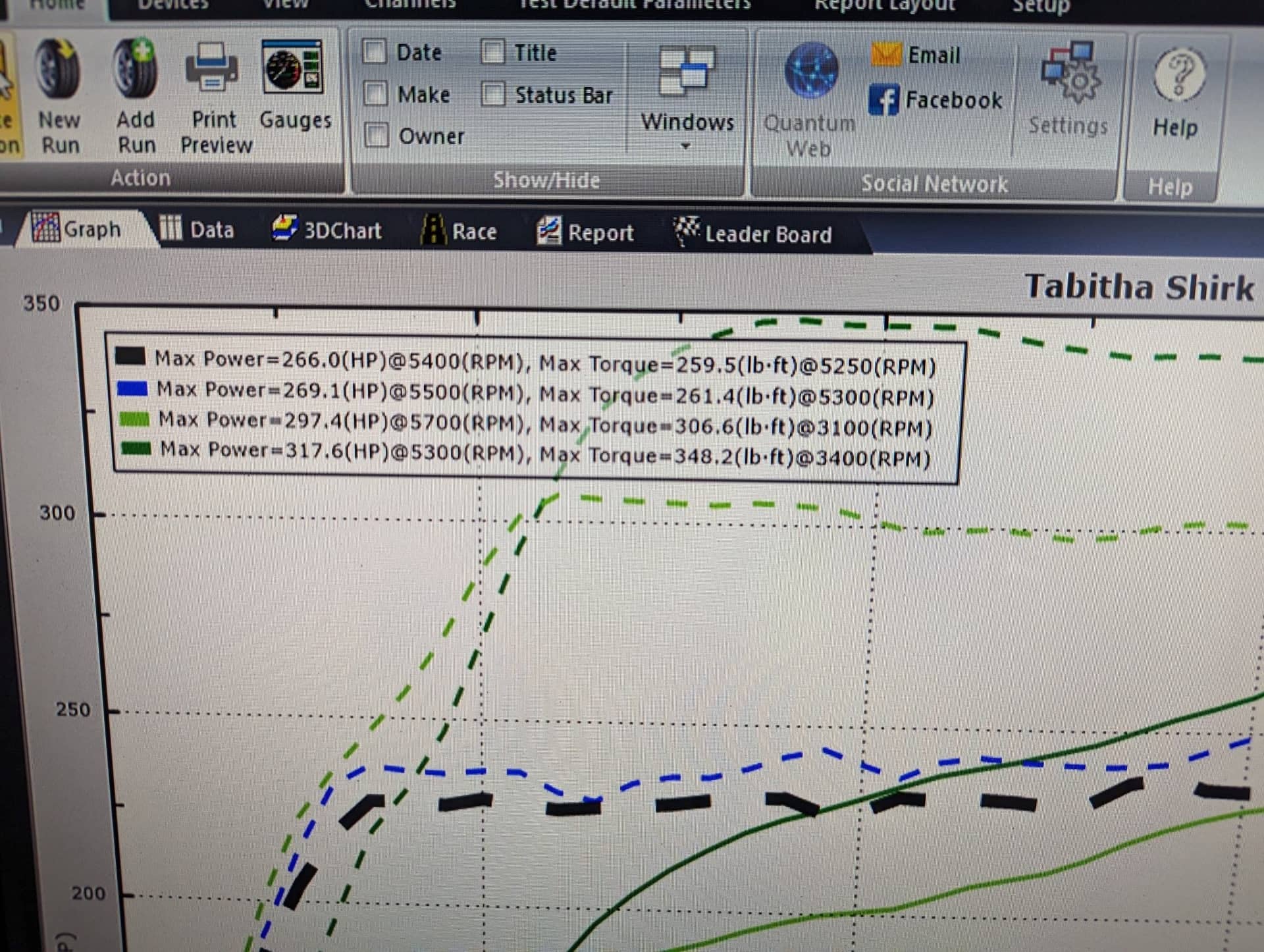
JM Automotive's FA24 dyno ladder on a Dyno Dynamics: stock 225.3 whp / 219.3 lb-ft; Stage 1 on 93 octane 260.6 whp / 324 lb-ft; Stage 1 on E85 289.4 whp / 351 lb-ft; Stage 2 on E85 320.0 whp / 348.4 lb-ft. Note this dyno reads roughly 15-20 percent lower than most others, so compare the gains rather than the absolute numbers.

What to do next

Compare these mods

Browse Beginner mods with pricing and compatibility notes.

See builds running this setup

Community-verified builds you can reference.

Add to planner

Sequence and budget this alongside your other mods.

Related Questions

Community FAQ

tuning

Is an Accessport/tune worth it on a mostly stock VB?

Yes, if you are past warranty concerns. It is the single best value modification on the platform - roughly 35 wheel horsepower and a 48 percent torque increase, which no bolt-on comes close to.

Read answer →

reliability

What fuel should I run: 91, 93, or can I use 87?

Premium, always. Subaru specifies 91 octane or higher, so 91 is the floor rather than the target. Run 93 if it is available, and never run 87.

Read answer →

tuning

Do I need a tune for an intake system on the VB?

It depends on the exact intake and calibration. Some VB products are manufacturer-validated for the stock calibration, while others require or include a matching map. Follow the intake maker's instructions and confirm the full hardware, fuel, and tune combination.

Read answer →

warranty

Will mods void my warranty?

Aftermarket parts do not automatically cancel every warranty claim. Modification-related damage can be excluded; tuning can create disputes, and OEM restoration does not guarantee coverage or hide past programming.

Continue reading

Related Guides

Beginner

WRX Build Path by Budget

Four complete shopping lists for the VB, with real prices and nothing padded to hit a number.

Read guide →

Beginner

First Power Mods for the 2022+ WRX

The dependency chain behind a VB build, and what doing it out of order actually costs you.

Read guide →

Tuning

WRX VB Tuning Guide

How to choose the right tuning path before you buy parts, flash a map, or chase power.

Read guide →
Last updated Oct 22, 2026 · Reviewed by WRX Base Editorial · See a mistake? File a correction →

View source

Why the tune is so far ahead on this car

Subaru ships the VB with a deliberately soft tune. Stock boost starts around 8 psi and only ramps toward 12 psi near redline, and the factory timing and fueling tables leave a lot on the table in the midrange. A tune pushes boost to roughly 18 psi and fills in the flat spot between 3,200 and 5,000 rpm, which is where the car actually lives on a back road or an on-ramp. That is why the torque number moves so much more than the horsepower number. Peak power climbs about 16 percent; peak torque climbs about 48 percent. The car feels transformed not because it makes big peak numbers but because the hole in the middle of the powerband is gone. The corollary is uncomfortable for anyone who likes buying parts: because the restriction on a stock VB is the tune rather than airflow, bolt-ons that increase airflow have very little to work with until the tune is already fixed.

Ethanol is the best second purchase

If you have E85 near you, it is the cheapest real power after the tune. Going from pump gas to ethanol on an otherwise Stage 1 car is worth roughly 29 wheel horsepower and 27 lb-ft in JM's testing - a gain comparable to a full Stage 2 hardware package, for a fraction of the parts cost. A sensor kit plus a flex fuel tune runs about $1,000 all in. Compare that to a downpipe, intercooler, charge pipe and retune, which lands north of $2,500 for a similar jump. Ethanol wins on price and it wins on knock margin in summer heat. The honest caveats: you will lose 20-30 percent fuel economy, E85 pump quality varies by station and by season, and a flex fuel setup is a clearer modification signal to a dealer than a map you can flash back. If there is no E85 station on your commute, skip this tier entirely and put the money toward hardware instead.

What your money actually buys

Heads up

Airflow measurement depends on the complete intake and sensor arrangement, not housing diameter alone. Flow behavior, sensor placement, installation and the calibration’s assumptions all matter. An unsuitable intake/map combination can cause fueling and drivability problems, but we have not verified a universal numerical AFR result for intake swaps. Use the exact intake maker’s tested application and the actual calibration notes. Some products have stock-calibration approval for a defined setup; that does not approve the same product on every OTS or custom map. If recalibration is required, arrange it before installation and do not drive the mismatched setup while waiting. For ATLAS, verify the actual ATLAS file and NAMR’s current VB OTS restrictions. Diameter, brand, a generic stage label or speed density alone does not establish compatibility. Sources: NAMR VB OTS requirements: https://motorsportsresearch.atlassian.net/wiki/spaces/ATLAS/pages/240943112 NAMR hardware guidance: https://motorsportsresearch.atlassian.net/wiki/spaces/ATLAS/pages/49741825
View source

The mods that return almost nothing

A catback is the most commonly bought first mod on this platform and the worst value if power is your goal. On a turbo car the main restriction is upstream of the catback entirely - the factory downpipe and its catalyst. Replacing only the rear section changes the sound and very little else. Buy a catback because you want the car to sound different. Do not buy one expecting horsepower. An intake in isolation is similar. Once the tune is in place an intake is worth a modest gain and mostly helps at the top of the rev range, but it is not a substitute for a tune and it is not where a first thousand dollars belongs. Charge pipes, cosmetic engine covers, intake scoops, and lightweight pulleys are all fine purchases if you want them. Rank them honestly: they are appearance and durability items on this platform, not power mods.

Quick decision

How much are you actually willing to spend in year one?

Where the stock turbo runs out

There is a ceiling worth knowing before you plan a budget. The factory turbo is comfortable supporting a tuned car into the low 300s at the wheels on ethanol. Past that you are into turbo, fueling and clutch territory, and costs climb steeply for progressively smaller returns. There is a second ceiling that catches people out: the stock transmission. Tuners generally cap torque around 350 lb-ft to keep the factory gearbox intact, and a Stage 2 ethanol car is already sitting right at that number. This is why chasing peak torque on a stock drivetrain is a losing game - you hit a mechanical limit before you hit an airflow one. Plan your budget against those two numbers. If your goal is a fast, reliable daily, the tune and the fuel get you most of the way there and the rest of the money is better spent on tires and brakes.

The ranking, in order

1. Tuning device and an off-the-shelf map - roughly $22 per wheel horsepower, and the torque gain is transformative. Nothing else is close. 2. Ethanol, if you have it locally - roughly $35 per wheel horsepower on top of the tune, and it improves knock margin in hot weather. 3. A custom or e-tune over an off-the-shelf map - a few hundred dollars for a tune matched to your car, your fuel and your climate. Modest power, meaningful drivability and safety margin. 4. Intake, with a tune to match - real but modest, and only after the first three. 5. Downpipe - the largest single hardware gain on the exhaust side, but it is the most expensive tier to do legally and the emissions implications are real where you live or they are not. Know which before you buy. 6. Intercooler - buys back sustained power on hot days and repeat pulls rather than peak numbers. A track and canyon item, not a dyno item. 7. Catback - sound only. Budget it out of your entertainment money, not your power money.

Choose a supported flex-fuel interface

Source: geraldjustprojects.com/product/gjp-can-flexfuel-kit-wrx-sti

For a documented CAN-based option, see the Gerald Just Projects / CSG Spec CAN FlexFuel Kit, SKU GJP-CAN-FF-KIT-SUB, and select the 2022+ VB WRX configuration. The manufacturer lists ATLAS compatibility and supplies a CAN interface, sensor and vehicle-specific installation materials. Confirm the exact kit configuration with the tuner before buying. A compatible ATLAS flex-fuel calibration must interpret the CAN data, apply the intended fuel strategy and handle sensor faults. Installing the kit alone does not enable ethanol compensation, and its COBB compatibility does not make a COBB calibration portable to ATLAS. A Fuel-It Bluetooth/analog kit is not established as an equivalent direct ATLAS CAN input. Sources: https://geraldjustprojects.com/product/gjp-can-flexfuel-kit-wrx-sti/ https://geraldjustprojects.com/csg-wrx-vb-canbus-flex-fuel/ https://motorsportsresearch.atlassian.net/wiki/spaces/ATLAS/pages/237043713

Pre-purchase checks for this mod

  • 1Verify the current tuning-device/application, ECU, market and transmission support; do not assume manuals and CVTs require different Accessport part numbers.
  • 2Budget for the tuning device before any hardware; nothing else returns power without it
  • 3Check local E85 availability and pump quality before planning an ethanol build
  • 4Read the warranty guide before installing anything that touches the ECU
  • 5Verify the exact intake application, complete sensor/airflow installation and map requirements; housing diameter alone does not establish compatibility.
  • 6Assess mechanical condition before changes. If planning ATLAS logs, current software requires a supported custom calibration flashed directly by ATLAS; do not request OEM baseline pulls.

Jump To

The short answerWhy the tune is so far ahead on this carEthanol is the best second purchaseWhat your money actually buysThe mods that return almost nothingWhere the stock turbo runs outThe ranking, in orderChoose a supported flex-fuel interface

Read answer →

Community FAQ

Is an Accessport/tune worth it on a mostly stock VB?

Yes, if you are past warranty concerns. It is the single best value modification on the platform - roughly 35 wheel horsepower and a 48 percent torque increase, which no bolt-on comes close to.

Read answer →
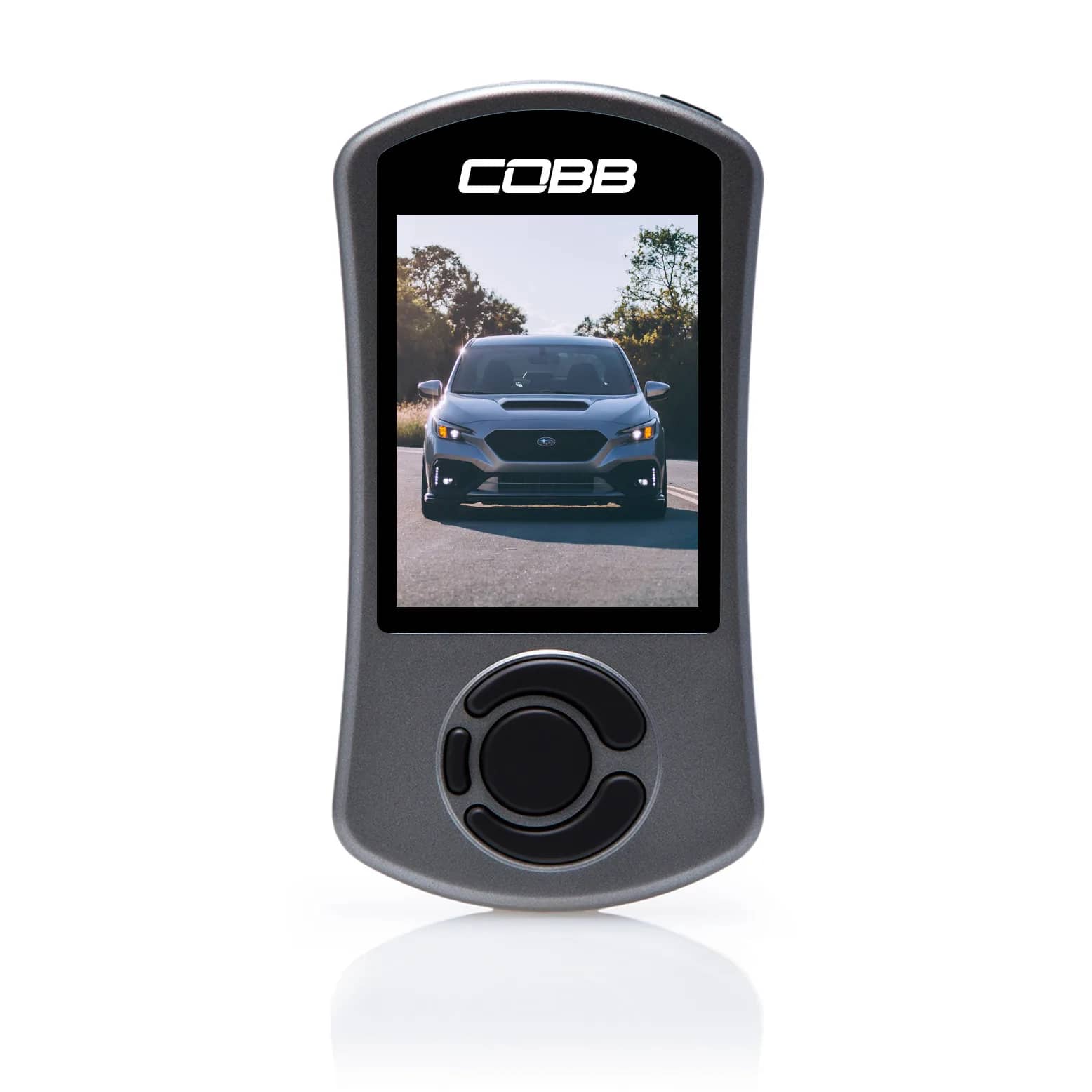
COBB Accessport
The gate for every other mod

COBB Accessport

COBB

$655

See mod →

FeatureCOBB AccessportMishimoto Performance Air Intake, Micro-Wrinkle BlackMBRP Armor Pro Cat Back Exhaust Burnt Stainless Tip WRX
Price range$655$401 – $445$601
Requires tune?It is the tuneYesNo
Daily-friendlyYesYesYes - some drone
COBB Accessport
Best dollar per horsepower

COBB

COBB Accessport

Tracked current price

$654.50

15% off

checked Nov 28

Used in 5 builds

View at SubimodsSee full mod page →
Drunkmann Tuning Stock-Intake OTS Map WRX 2022-2026 6MT
Sharper than free OTS maps

Drunkmann Tuning

Drunkmann Tuning Stock-Intake OTS Map WRX 2022-2026 6MT

Tracked current price

$100.00

33% off

checked Nov 28

View at Felix PerformanceSee full mod page →

Pricing tracked independently.