WRX BaseAdd Build
Mods
Guides
Builds
Community
Planner
Add Your Build
Sign inSign up

WRX Base © 2026

AboutContactTikTokEditorial PolicyCorrectionsPrivacy PolicyUser Agreement

Tracked prices are not retailer-controlled.

This website provides informational content only. Automotive modifications may affect vehicle safety, reliability, emissions compliance, and warranty status. Always consult a qualified professional before modifying your vehicle.

WRX Base is an independent community resource and is not affiliated with, endorsed by, or sponsored by Subaru.

  1. WRX Base
  2. ›
  3. Decide
  4. ›
  5. How Much Power Can the Stock FA24 Handle?
reliability

How Much Power Can the Stock FA24 Handle?

The engine is not your first limit, and the number everyone quotes is the wrong one.

Updated Aug 20, 2026·9 min read·Reviewed by WRX Base Editorial·11 related mods

Verdict

The short block is good to around 400whp, but the stock turbo runs out in the low 300s on ethanol and the transmission wants torque held near 350 lb-ft. That torque figure, not any horsepower number, is the real ceiling.

Four limits, in the order you meet them

**The stock turbo** is comfortable into the low 300s at the wheels on ethanol and falls away past that. This is the first ceiling most owners actually reach. **The transmission** wants torque held near 350 lb-ft. A Stage 2 ethanol car already sits at roughly 348 lb-ft, which means you arrive at this limit at the same time you arrive at the turbo's. **The fuel system** runs out on ethanol before the block does. The factory injectors and high pressure pump cap a big-turbo car well below what the short block could take. **The short block** is generally considered safe to around 400whp, with real caution beyond 400 to 450. The connecting rods are the accepted weak link, and they are meaningfully stronger than the FA20's in the older VA. Read that order carefully. The engine is fourth. By the time it becomes the constraint you have already bought a turbo, injectors, a high pressure pump and probably a clutch. This is why the question as usually asked produces a useless answer. Knowing the block handles 400whp tells you nothing about what your car can do, because your car will meet three other walls first.

Source

A documented FA24 ladder measured Stage 2 on E85 at 320.0 whp and 348.4 lb-ft, with roughly 350 lb-ft cited as the figure to stay near for stock transmission health. Same car, same pull - the horsepower number still has headroom while the torque number does not. Note this dyno reads roughly 15-20 percent below most others.

What to do next

Compare these mods

Browse reliability mods with pricing and compatibility notes.

See builds running this setup

Community-verified builds you can reference.

Add to planner

Sequence and budget this alongside your other mods.

Related Questions

Community FAQ

reliability

How much power can the stock FA24 engine handle?

The short block is generally considered safe to around 400whp, with real caution beyond 400 to 450. But you will hit the stock turbo around the low 300s and the stock transmission's torque limit well before the engine becomes the problem.

Read answer →

cost / planning

What mods do I need to make around 300whp on a 2022+ WRX?

There is no universal 300whp parts list. Fuel, dyno, transmission, exact hardware, and calibration all change the route and budget; set the target with a qualified tuner before buying parts.

Read answer →

tuning

Is the SPT/CVT reliable, and how much tuning can it handle?

More reliable than its reputation, and genuinely good as a daily. It is torque-limited rather than power-limited, so a tune must be shaped around holding torque back rather than chasing a peak figure.

Read answer →

tuning

Can I run E85 or an ethanol blend in a 2022+ WRX?

Continue reading

Related Guides

tuning

How to Build a 300whp 2022+ WRX

The full parts list, the real cost, and the honest reliability math on a stock turbo.

Read guide →

tuning

How to Build a 400whp 2022+ WRX

The turbo, the fuel system, the clutch, and the honest reliability math at the edge of stock internals.

Read guide →

reliability

WRX Reliability Guide

The FA24 is a solid engine. Most VB reliability problems are decisions, not defects.

Read guide →
Last updated Aug 20, 2026 · Reviewed by WRX Base Editorial · See a mistake? File a correction →

View source

Why torque is the number that matters

A transmission does not experience horsepower. It experiences torque, multiplied by whatever gear ratio is engaged. That is why gearbox limits are quoted in lb-ft and why peak horsepower is close to irrelevant to a transmission's survival. On the FA24 this matters more than usual, because tuning this engine is fundamentally a torque result. A Stage 1 map adds roughly 16 percent peak horsepower and roughly 48 percent peak torque, and most of that torque arrives low - between 3,200 and 5,000 rpm. That is exactly where a low gear multiplies it hardest. So two cars quoting the same horsepower can be treating their drivetrains very differently depending on where and how the torque arrives. A map that builds power up top is far kinder than one that piles torque on at 3,000 rpm, and the second one feels more impressive on the road. The practical implication: when you evaluate a tune, ask about the torque curve rather than the peak power figure. And be sceptical of any tuner who is proud of a big low-rpm number on a stock-drivetrain car - that number is being paid for by your gearbox. This is also why the SPT deserves particular care. The same map that transforms a manual concentrates its effect precisely where an automatic likes it least.

What each limit costs to move

What the numbers mean in practice

Translating limits into builds: **Stage 1 on pump gas, around 260 whp.** Everything is comfortably inside every limit. This is a car that will last indefinitely with normal maintenance. **Stage 1 on ethanol, around 289 whp.** Still inside everything, and it beats a full pump gas hardware package. The best value point on the platform. **Stage 2 on ethanol, around 320 whp and 348 lb-ft.** You are now sitting on the transmission's torque ceiling and near the turbo's practical limit. This is the sensible stopping point, and it is where every component is still doing what it was designed to do. **Past that** you are buying a turbo, which drags injectors and a high pressure fuel pump behind it, and the added torque drags a clutch. The transmission becomes a question rather than a component. One caveat about all these numbers: wheel horsepower is a measurement, not a property of the car. The figures above come from a Dyno Dynamics that reads roughly 15 to 20 percent below most others. Treat them as a recipe rather than a target to validate, because chasing a specific readout on a specific machine is how people spend thousands for nothing.

Quick decision

Which limit are you actually near?

Heads up

Stock internals being good to around 400whp is not permission to run 400whp on a stock drivetrain. At that power the transmission is far outside its comfortable torque range and the clutch is likely past its capacity. The block surviving is a different question from the car being reliable.
View source

How to stay inside the limits

Practical rules that keep a fast VB reliable. **Know your torque figure.** If your tuner has not told you, ask. It is the number that determines drivetrain life and it is routinely omitted in favour of the horsepower headline. **Ask for power up top rather than torque down low.** A tune shaped to build progressively is meaningfully kinder than one optimised for a peak torque figure at 3,000 rpm, and on a real road the difference in how fast the car is amounts to very little. **Use boost by gear if your platform supports it.** Being able to pull boost in the gear that stresses the drivetrain most is a genuine reliability tool. **Do not launch it repeatedly.** Launch control exists to deliver a violent consistent start, and everything from the flywheel back absorbs that. **Decide your ceiling before buying parts.** The most expensive VB builds are the ones nobody planned - a turbo because the stock one ran out, then a fuel system because the turbo needed it, then a clutch, then a gearbox conversation. A 300whp ethanol car costs roughly $3,400 in parts and sits inside every factory limit. That is not a compromise. It is the most power this car makes while every component is still doing its intended job.

The verdict

The honest answer to the question in the title is that it depends which part you mean, and the part everyone asks about is not the one that stops you. The short block will take around 400whp. You will not get there on the stock turbo, the stock fuel system will not supply it, and the stock transmission will be well outside its comfort zone by the time you do. The useful number is roughly 350 lb-ft of torque, because that is the transmission's limit and it is the one you reach first in practice. Build to around 300whp on ethanol and you have a car that is quick everywhere, comfortable in traffic, and operating inside every constraint the factory designed around. Build past it deliberately, with the drivetrain budgeted, or not at all. What does not work is treating the engine's capability as the car's capability. That mistake is what turns a $3,400 build into a $14,000 one in increments nobody ever approved.

Pre-purchase checks for this mod

  • 1Know your torque figure, not just your horsepower figure
  • 2Keep torque near 350 lb-ft to stay inside the stock gearbox's comfort zone
  • 3Expect the stock turbo to run out in the low 300s at the wheels on ethanol
  • 4Budget injectors and a high pressure pump for any big-turbo ethanol build
  • 5Ask which dyno produced any number you are comparing against
  • 6Decide your ceiling before buying parts, not during

Jump To

Four limits, in the order you meet themWhy torque is the number that mattersWhat each limit costs to moveWhat the numbers mean in practiceHow to stay inside the limitsThe verdict

Not on the stock tune. The VB is not flex fuel from the factory, so ethanol needs a flex fuel sensor and a tune written for it. Done properly it is the best power per dollar on the platform.

Read answer →

Community FAQ

How much power can the stock FA24 engine handle?

The short block is generally considered safe to around 400whp, with real caution beyond 400 to 450. But you will hit the stock turbo around the low 300s and the stock transmission's torque limit well before the engine becomes the problem.

Read answer →
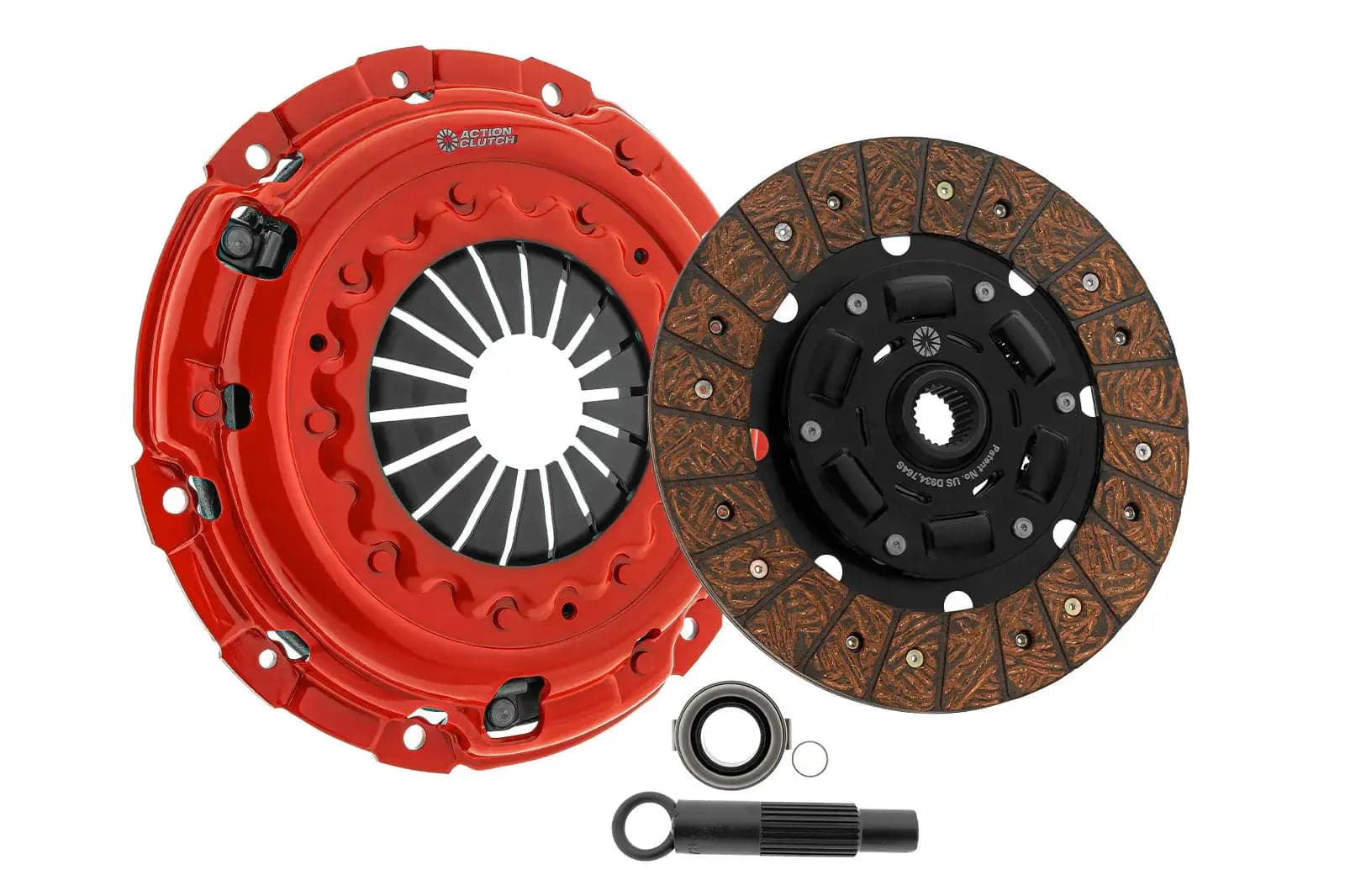
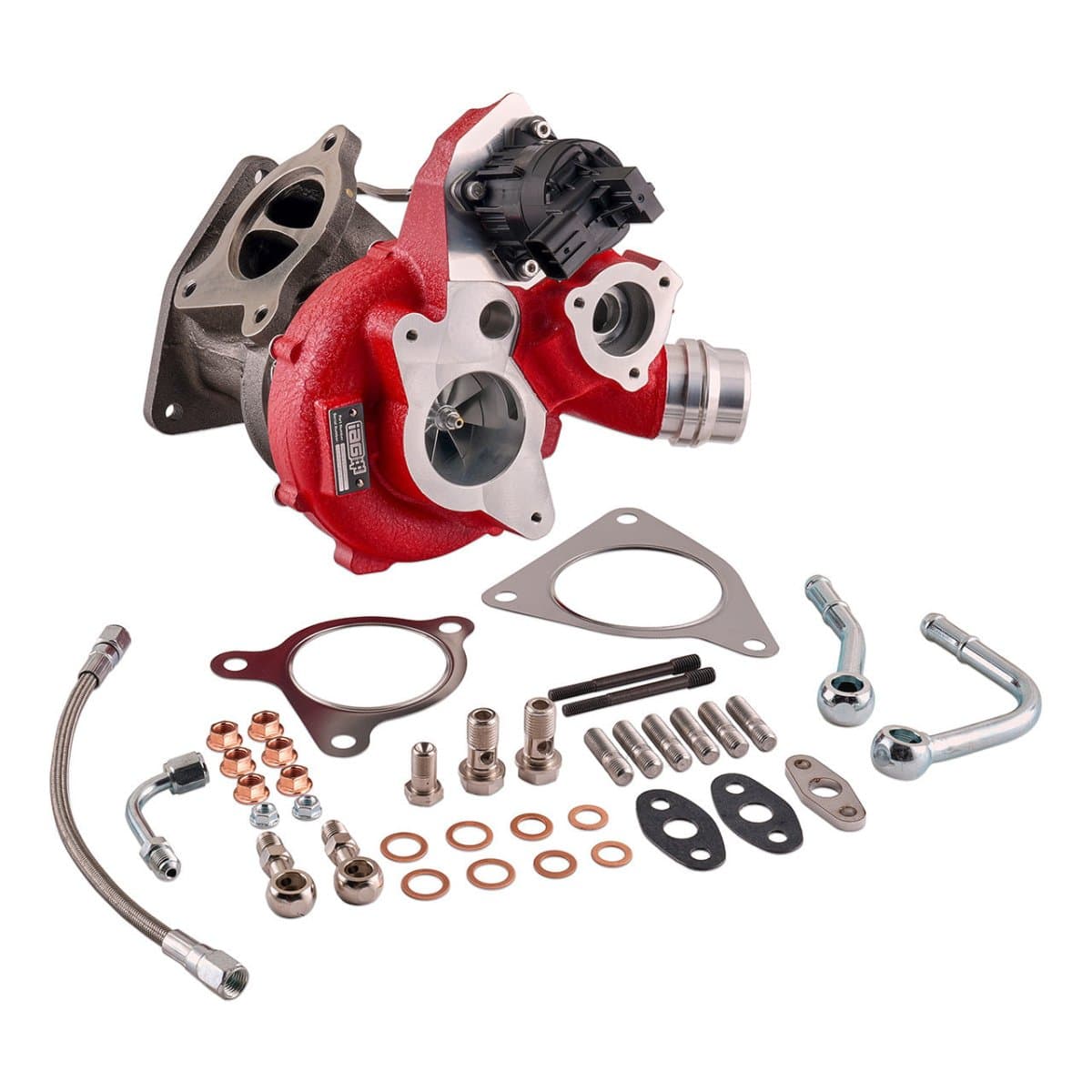
FeatureIAG Performance 600 Ball Bearing Turbocharger w/ WastegateNostrum Upgrade Injector Set WRXAction Clutch Stage 2 Single Clutch Kit WRX w/ OEM Flywheel
Price range$2,500$1,660$680
Requires tune?Yes - pro tuneYesNo
Daily-friendlyMoves the turbo limitMoves the fuel limitMoves the clutch limit
IAG Performance 600 Ball Bearing Turbocharger w/ Wastegate
Required past the low 300s

IAG Performance

IAG Performance 600 Ball Bearing Turbocharger w/ Wastegate

Tracked current price

$2499.99

checked Oct 13

View at SubimodsSee full mod page →
Action Clutch Stage 2 Single Clutch Kit WRX w/ OEM Flywheel | ACR-3599-FFW
When torque exceeds stock clutch

Action Clutch

Action Clutch Stage 2 Single Clutch Kit WRX w/ OEM Flywheel | ACR-3599-FFW

Last tracked price

$679.96

last checked Oct 7

View at Import Image RacingSee full mod page →

Pricing tracked independently.