WRX BaseAdd Build
Mods
Guides
Builds
Community
Planner
Add Your Build
Sign inSign up

WRX Base © 2026

AboutContactTikTokEditorial PolicyCorrectionsPrivacy PolicyUser Agreement

Tracked prices are not retailer-controlled.

This website provides informational content only. Automotive modifications may affect vehicle safety, reliability, emissions compliance, and warranty status. Always consult a qualified professional before modifying your vehicle.

WRX Base is an independent community resource and is not affiliated with, endorsed by, or sponsored by Subaru.

  1. WRX Base
  2. ›
  3. Decide
  4. ›
  5. How to Build a 300whp 2022+ WRX
tuning

How to Build a 300whp 2022+ WRX

The full parts list, the real cost, and the honest reliability math on a stock turbo.

Updated Aug 20, 2026·9 min read·Reviewed by WRX Base Editorial·11 related mods

Verdict

300whp on a VB is an ethanol number. Stage 2 hardware plus a flex fuel system and a custom tune gets there for roughly $3,500 in parts; the same hardware on pump gas lands meaningfully short and is not worth the spend.

Read the number before you chase it

A wheel horsepower figure is a measurement, not a property of the car. The same VB reads differently on a Dyno Dynamics, a Mustang and a Dynojet, and the spread is not small - Dyno Dynamics figures commonly run 15 to 20 percent below what other dynos show on the same vehicle. That matters here more than usual, because the best-documented FA24 ladder available comes off a Dyno Dynamics. On that dyno a Stage 2 ethanol car measured 320 whp. On a Dynojet the same car would likely read considerably higher, and a car reading 300 whp on a Dynojet may be well under that elsewhere. So treat 300whp as a build recipe rather than a target to validate. The recipe below is a genuinely quick VB on any dyno. Chasing a specific readout on a specific machine is how people spend another two thousand dollars for nothing.

Source

JM Automotive's Dyno Dynamics ladder on the FA24: stock 225.3 whp / 219.3 lb-ft, Stage 1 on 93 octane 260.6 whp / 324 lb-ft, Stage 1 on E85 289.4 whp / 351 lb-ft, Stage 2 on 91 octane 274.7 whp / 324 lb-ft, Stage 2 on E85 320.0 whp / 348.4 lb-ft. They note their dyno reads roughly 15-20 percent lower than most others, and cite roughly 350 lb-ft as the ceiling for keeping the stock transmission happy.
View source

What to do next

Compare these mods

Browse tuning mods with pricing and compatibility notes.

See builds running this setup

Community-verified builds you can reference.

Add to planner

Sequence and budget this alongside your other mods.

Related Questions

Community FAQ

tuning

Is an Accessport/tune worth it on a mostly stock VB?

Yes, if you are past warranty concerns. It is the single best value modification on the platform - roughly 35 wheel horsepower and a 48 percent torque increase, which no bolt-on comes close to.

Read answer →

reliability

What fuel should I run: 91, 93, or can I use 87?

Premium, always. Subaru specifies 91 octane or higher, so 91 is the floor rather than the target. Run 93 if it is available, and never run 87.

Read answer →

tuning

Is the SPT/CVT reliable, and how much tuning can it handle?

More reliable than its reputation, and genuinely good as a daily. It is torque-limited rather than power-limited, so a tune must be shaped around holding torque back rather than chasing a peak figure.

Read answer →

warranty

Will mods void my warranty?

Not automatically - that is not how it works. But a tune or any power modification makes a powertrain claim much harder, and the ECU records reflashes even after you return to stock.

Continue reading

Related Guides

tuning

Best Mods Before a WRX Tune

What genuinely needs to be on the car before a tuner touches it - and what does not.

Read guide →

beginner

Cheapest Ways to Make Power on the 2022+ WRX

Ranked by dollars per wheel horsepower, not by what looks good in the mod list.

Read guide →

beginner

WRX Build Path by Budget

Four complete shopping lists for the VB, with real prices and nothing padded to hit a number.

Read guide →
Last updated Aug 20, 2026 · Reviewed by WRX Base Editorial · See a mistake? File a correction →

Ethanol does the work, not the hardware

Compare two rows of that ladder and the whole build strategy falls out. Stage 2 on pump gas: 274.7 whp. That is a full hardware package - intake, intercooler, charge pipe - plus a custom tune, and it sits about 14 whp above a Stage 1 car that had none of it. Stage 1 on ethanol: 289.4 whp. No hardware at all beyond a fuel sensor and a pump, and it beats the pump gas hardware build by 15 whp. The conclusion is not subtle. On the FA24 the fuel is worth more than the parts, and a 300whp build is fundamentally an ethanol build with supporting hardware attached - not a hardware build that happens to run ethanol. If you have no E85 near you, this guide's target is the wrong target; a Stage 1 car on 93 with good tires is the better car for your money.

The parts list

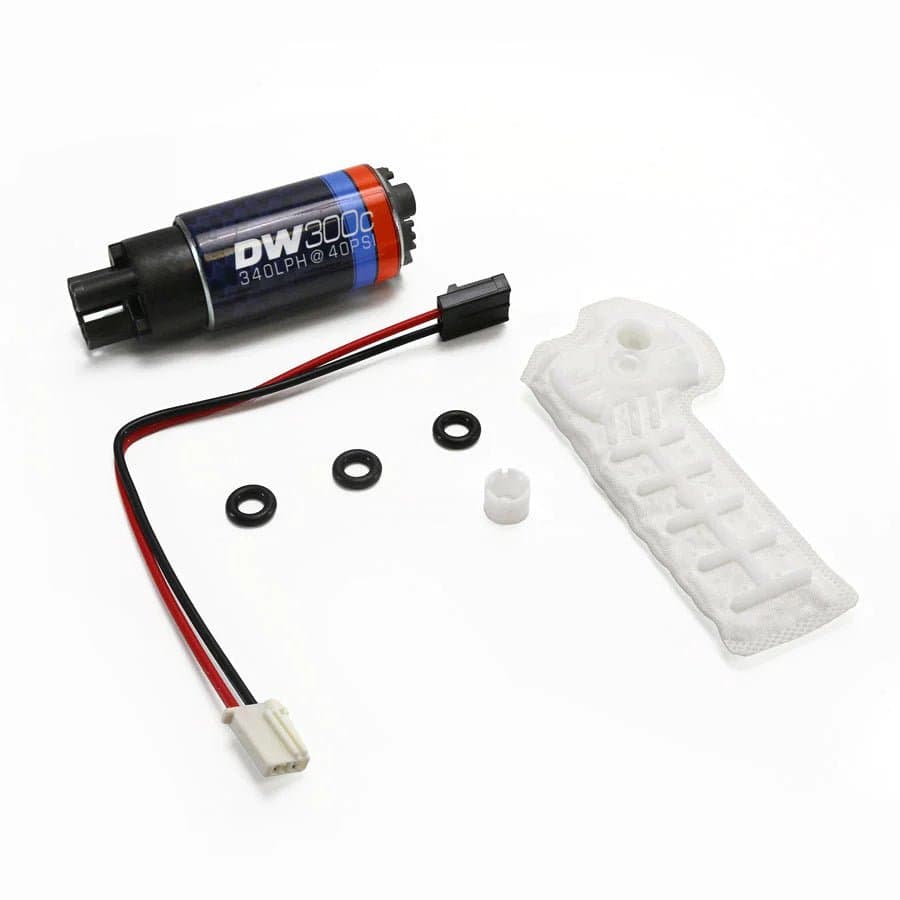
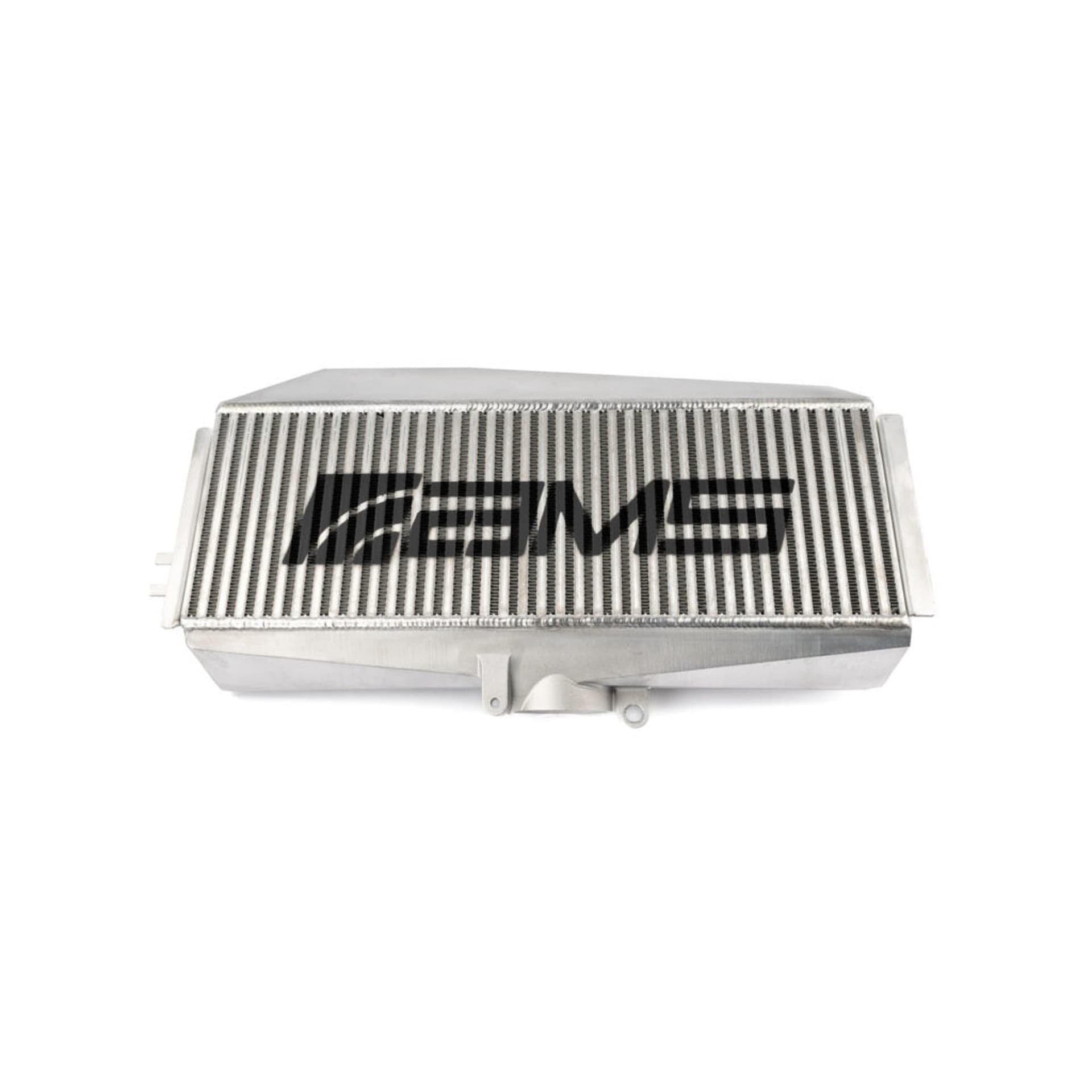
Tuning device, roughly $770. The gate for everything else. Intake, roughly $400 to $500. Required for a Stage 2 tune. Tell your tuner exactly which one you bought, because MAF housing diameter drives the map. Intercooler, roughly $750 for a quality top mount. At 300whp on ethanol you are making real heat, and this is what keeps the third pull as quick as the first. It buys sustained power rather than peak numbers. Charge pipe, roughly $265. Not for the power - for the leak-free charge path at the boost levels this build runs. The factory couplers are the usual failure point. Flex fuel sensor kit, roughly $440, and a 340 lph fuel pump, roughly $190. E85 needs around 30 percent more fuel volume than pump gas and the factory pump runs out before 300whp on ethanol. Custom flex fuel tune, roughly $575. Not an off-the-shelf map. At this power level on a variable fuel you want a tune written for your car. Parts total lands near $3,390, plus labor if you are not doing the install yourself.

The parts that define this build

Quick decision

Is 300whp the right goal for your car?

The two limits that matter

The first limit is torque, not horsepower, and it belongs to the transmission. Tuners generally hold the FA24 near 350 lb-ft to keep the factory gearbox intact, and a Stage 2 ethanol car already sits at roughly 348 lb-ft. You are not approaching that ceiling at 300whp - you are sitting on it. This is the single most important thing to understand about this build. The horsepower number has headroom. The torque number does not. A tuner who chases a bigger peak figure by adding midrange torque is spending your transmission's life to do it, and a good one will tell you so. The second limit is the turbo itself, which is comfortable into the low 300s on ethanol and falls off past that. Beyond it you are buying a turbo, and a turbo drags injectors and a high pressure fuel pump behind it, and the added torque drags a clutch. That is a different build at several times this cost. Together these make 300whp a genuinely sensible place to stop. It is the most power the stock drivetrain is comfortable with, reached with the cheapest possible combination of parts.

Heads up

E85 blend varies by station and by season - winter blends can drop well below E85 in actual ethanol content. This is exactly why the build uses a flex fuel sensor rather than a fixed ethanol map: the ECU reads actual content and adjusts. Running a fixed E85 map on a tank that turned out to be E60 is how people find the knock limit the expensive way.

What this costs to live with

Fuel economy drops 20 to 30 percent on ethanol. If you commute, price that honestly against the fun - it is the running cost people forget when they budget the build. Maintenance gets slightly more attentive rather than dramatically harder. Ethanol is hard on some fuel system components over long periods, plugs live a harder life at higher cylinder pressure, and oil changes want to be on the shorter end of the interval rather than the longer. Warranty risk is real and worth stating plainly. A flex fuel system is not something you flash away before a dealer visit. This is the tier where you should assume powertrain claims may be contested and decide whether you are comfortable with that. None of this makes the build a bad idea. It makes it a decision rather than a purchase, and it is the tier where being honest with yourself about how you use the car pays off.

The verdict

Build it with ethanol or do not build it. That is the whole guide in a sentence. With E85 available, roughly $3,400 in parts and one good custom tune produces a VB that is quick everywhere, comfortable in traffic, and running inside the limits its drivetrain was designed around. It is the most satisfying stopping point on this platform. Without E85, the same money buys about 14 wheel horsepower over a Stage 1 car and a set of parts that mostly exist to support a fuel you are not running. Spend it on a Stage 1 tune, tires and brakes instead, and you will have a faster car on any road that has corners in it. And once you are there, stop. The next real step past 300 is a turbo, and everything that step drags behind it costs more than this entire build.

Pre-purchase checks for this mod

  • 1Confirm E85 availability near you before committing - this build depends on it
  • 2Budget a 340 lph fuel pump; the factory pump will not support ethanol at this power
  • 3Fit every airflow part before the tuning session so you pay for one tune
  • 4Pressure-test for boost leaks before the dyno appointment
  • 5Ask your tuner which dyno they use so your target number means something
  • 6Keep torque near 350 lb-ft to stay inside the stock transmission's comfort zone
  • 7Keep stock hardware and records if the car is still under factory warranty

Jump To

Read the number before you chase itEthanol does the work, not the hardwareThe parts listThe parts that define this buildThe two limits that matterWhat this costs to live withThe verdict

Read answer →

Community FAQ

Is an Accessport/tune worth it on a mostly stock VB?

Yes, if you are past warranty concerns. It is the single best value modification on the platform - roughly 35 wheel horsepower and a 48 percent torque increase, which no bolt-on comes close to.

Read answer →
FeatureDeatschwerks DW300c Series 340LPH Fuel Pump w/ Install KitAMS Performance Top Mount Intercooler WRX 2022+AMS Performance Cold Air Intake Wrinkle Black
Price range$189$750$400
Requires tune?Yes - for ethanolNo - ReccommendedYes
Daily-friendlyYesYesYes
AMS Performance Top Mount Intercooler WRX 2022+
Required for heat at 300

AMS Performance

AMS Performance Top Mount Intercooler WRX 2022+

Last tracked price

$749.95

last checked Oct 2

View at Import Image RacingSee full mod page →
Deatschwerks DW300c Series 340LPH Fuel Pump w/ Install Kit
Stock pump runs out

Deatschwerks

Deatschwerks DW300c Series 340LPH Fuel Pump w/ Install Kit

Last tracked price

$189.00

last checked Oct 2

View at Import Image RacingSee full mod page →

Pricing tracked independently.