WRX BaseAdd Build
Mods
Guides
Builds
Community
Planner
Add Your Build
Sign inSign up

WRX Base © 2026

AboutContactTikTokEditorial PolicyCorrectionsPrivacy PolicyUser Agreement

Tracked prices are not retailer-controlled.

This website provides informational content only. Automotive modifications may affect vehicle safety, reliability, emissions compliance, and warranty status. Always consult a qualified professional before modifying your vehicle.

WRX Base is an independent community resource and is not affiliated with, endorsed by, or sponsored by Subaru.

  1. WRX Base
  2. ›
  3. Decide
  4. ›
  5. WRX E85 and Ethanol Guide
Tuning

WRX E85 and Ethanol Guide

The best power per dollar on the platform, and the one that changes how you live with the car.

Updated Oct 22, 2026·10 min read·Reviewed by WRX Base Editorial·9 related mods

Verdict

With a flex fuel sensor and a proper tune, ethanol is worth roughly 29 wheel horsepower over pump gas on an otherwise Stage 1 car - beating a full pump gas Stage 2 build. Without that hardware, do not put it in the tank.

Why ethanol is worth the trouble

Two rows from a documented FA24 dyno ladder explain the entire appeal. Stage 2 on pump gas: 274.7 whp. That is a full hardware package - intake, intercooler, charge pipe - plus a custom tune. Stage 1 on E85: 289.4 whp. Almost no hardware, just a fuel sensor, a pump and a tune, and it beats the pump gas hardware build by roughly 15 whp. Stage 2 on E85 reaches 320.0 whp. So on this engine the fuel does more work than the parts do. Ethanol is worth roughly 29 wheel horsepower over pump gas on an otherwise Stage 1 car, and the cost of getting there is a fraction of the hardware it outperforms. Why it works: ethanol has a much higher effective octane and a strong cooling effect as it vaporises, which together give the engine far more knock margin. More margin means a tuner can run more timing and more boost safely. It is not that ethanol contains more energy - it contains less - it is that it lets the engine use more of what it has. That cooling effect also makes ethanol notably better in hot weather, when a pump gas car is pulling timing and an ethanol car is not.

Source

JM Automotive's Dyno Dynamics ladder on the FA24: Stage 1 on 93 octane 260.6 whp, Stage 1 on E85 289.4 whp, Stage 2 on 91 octane 274.7 whp, Stage 2 on E85 320.0 whp / 348.4 lb-ft. Note their dyno reads roughly 15-20 percent below most others, so compare the gains rather than the absolute figures.

What to do next

Compare these mods

Browse Tuning mods with pricing and compatibility notes.

See builds running this setup

Community-verified builds you can reference.

Add to planner

Sequence and budget this alongside your other mods.

Related Questions

Community FAQ

tuning

Can I run E85 or an ethanol blend in a 2022+ WRX?

Not on the stock tune. The VB is not flex fuel from the factory, so ethanol needs a flex fuel sensor and a tune written for it. Done properly it is the best power per dollar on the platform.

Read answer →

reliability

What fuel should I run: 91, 93, or can I use 87?

Premium, always. Subaru specifies 91 octane or higher, so 91 is the floor rather than the target. Run 93 if it is available, and never run 87.

Read answer →

cost / planning

What mods do I need to make around 300whp on a 2022+ WRX?

There is no universal 300whp parts list. Fuel, dyno, transmission, exact hardware, and calibration all change the route and budget; set the target with a qualified tuner before buying parts.

Read answer →

reliability

How often should I change the oil in a stock or tuned 2022+ WRX?

Subaru's guidance is around 6,000 miles or 6 months. Stock and gently driven, follow it. Tuned, tracked, or driven hard, halve it - roughly 3,000 miles is the sensible interval.

Continue reading

Related Guides

Tuning

How to Build a 300whp 2022+ WRX

The full parts list, the real cost, and the honest reliability math on a stock turbo.

Read guide →

Beginner

Cheapest Ways to Make Power on the 2022+ WRX

Ranked by dollars per wheel horsepower, not by what looks good in the mod list.

Read guide →

Tuning

How to Build a 400whp 2022+ WRX

The turbo, the fuel system, the clutch, and the honest reliability math at the edge of stock internals.

Read guide →

Last updated Oct 22, 2026 · Reviewed by WRX Base Editorial · See a mistake? File a correction →

View source

What you actually need

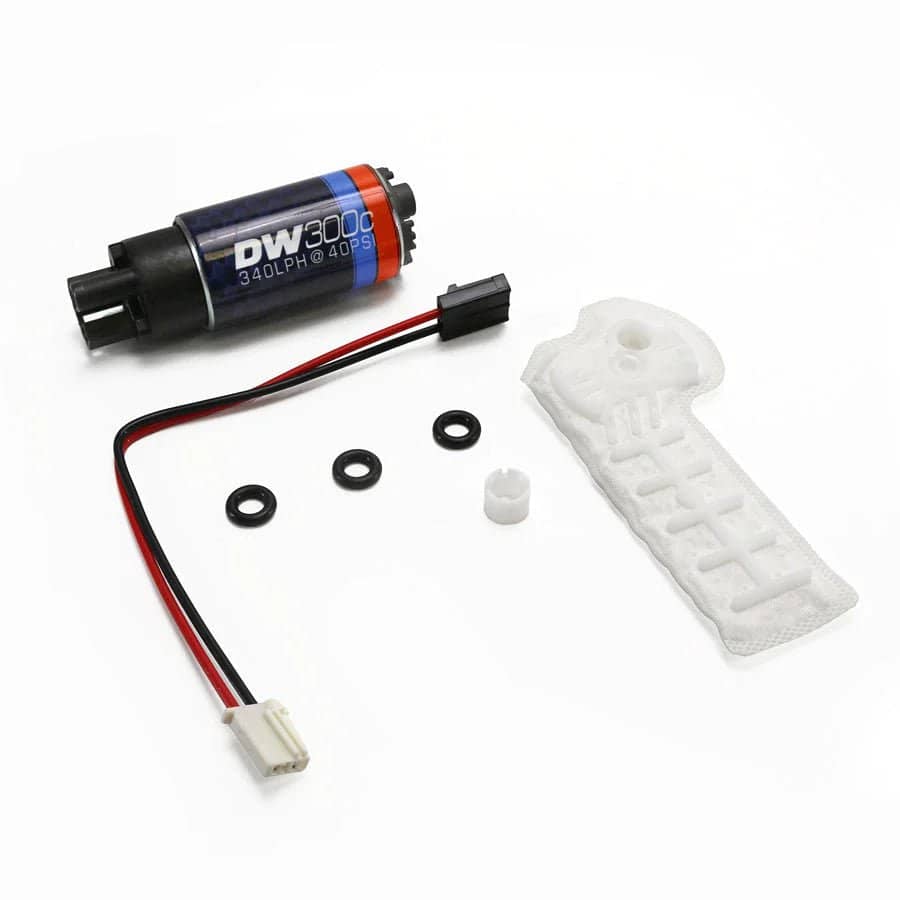
The VB is not a flex fuel vehicle from the factory. The ECU has no way to know what is in the tank, and the stock tune assumes gasoline. Putting E85 into an unmodified VB means the engine runs dramatically lean for the fuel, which is the condition that damages engines rather than the one that makes power. The hardware list for a stock-turbo ethanol build: **A flex fuel sensor kit**, roughly $440. This reads actual ethanol content and reports it to the ECU. **A flex fuel tune**, roughly $575. Not an off-the-shelf map - a fuel that varies needs a map written to adapt. **A higher flow low pressure fuel pump**, roughly $190 for a 340 lph unit. Ethanol needs around 30 percent more fuel volume than gasoline and the factory pump runs out. That is roughly $1,200 on top of a tuning device, and it buys more power than a hardware package costing considerably more. For big-turbo builds targeting 400whp, the fuel system requirement grows substantially: upgraded direct injectors at roughly $1,660 and an upgraded high pressure fuel pump at roughly $1,235. The factory injectors and HPFP cap you well below the block's capability, and they go in together - upgrading one moves the restriction rather than removing it.

Why the sensor matters more than the map

This is the point that separates a reliable ethanol car from an expensive lesson. Pump E85 is not consistently E85. Blends vary by station, by region and by season, and winter blends can contain substantially less ethanol than the label suggests. The number on the pump is a category, not a specification. A fixed ethanol map assumes a specific content. Fill up with something meaningfully weaker and the map is now wrong in the dangerous direction - less ethanol means less knock resistance while the tune is still running the timing and boost that ethanol allowed. A compatible sensor can supply actual ethanol content to a matching flex-fuel calibration. Adaptation is limited to its supported blend range, fuel-system capacity, configuration and sensor-fault strategy; it does not make every pump blend or hardware combination suitable. This is why the sensor is not an optional refinement on top of an ethanol tune. It is the thing that makes running ethanol on public pumps sensible at all. NAMR documents ATLAS flex-fuel and custom CAN inputs. Verify the actual sensor kit’s ECU/CAN interface, gateway requirements and matching feature/calibration. A Bluetooth ethanol display alone does not supply a supported input to the ECU. Use the provider’s permitted fuel range and operating limits. Sources: ATLAS 2026.1 release notes: https://motorsportsresearch.atlassian.net/wiki/spaces/ATLAS/pages/44859393 NAMR hardware guidance: https://motorsportsresearch.atlassian.net/wiki/spaces/ATLAS/pages/49741825 NAMR custom-feature installation: https://motorsportsresearch.atlassian.net/wiki/spaces/ATLAS/pages/493125633

Ethanol hardware by build level

Quick decision

Is ethanol right for your car?

What it costs to live with

This is the part that gets skipped in power discussions and matters most day to day. **Fuel economy drops 20 to 30 percent.** Ethanol contains less energy per litre, so you burn more of it. Range falls with it, which means more stops and more planning. **Availability shapes your routine.** If there is no E85 station on your commute, this becomes a weekly annoyance rather than a minor one. A flex fuel sensor softens it considerably - you can run pump gas when convenient and ethanol when not - but you only get the power when you have made the effort. **Seasonal variation is real.** Winter blends contain less ethanol. With a sensor the car handles it; without one it is a hazard. **Maintenance tightens slightly.** Ethanol tends toward more fuel dilution of the oil, so shorter oil intervals are sensible. A tuned car already wants roughly 3,000 miles rather than 6,000, and ethanol reinforces that. **Warranty exposure is unambiguous.** A flex fuel system is physical hardware. Unlike a map, you cannot flash it away before a dealer visit. This is the tier where you should assume powertrain claims may be contested and decide whether you are comfortable with that. None of this makes ethanol a bad idea. It makes it a decision about how you use the car rather than simply a purchase.

Heads up

Do not put E85 in a stock VB to see what happens. The car is not flex fuel from the factory, the ECU cannot detect the change, and the engine will run dramatically lean for the fuel. This is one of the few genuinely damaging things you can do to an otherwise healthy VB in a single tank.

Where ethanol stops helping

Ethanol raises the knock ceiling. It does not raise the mechanical ones. The stock turbo is comfortable into the low 300s at the wheels on ethanol and falls away past that. More fuel quality does not make a turbo flow more air. The factory transmission is the binding constraint. Tuners hold torque near 350 lb-ft to keep it healthy, and a Stage 2 ethanol car already sits at roughly 348 lb-ft. At that point you are not approaching the limit, you are on it - which is precisely why 300whp on ethanol is such a sensible stopping point. The fuel system itself becomes the limit before the block does on a big-turbo car. The factory injectors and high pressure pump run out on ethanol well below what the short block can take, which is why a 400whp build includes both. So ethanol is best understood as the cheapest way to reach the drivetrain's natural limits, not as a way past them. That is a genuinely valuable thing to be - it means roughly $1,200 of fuel system gets you where several thousand dollars of hardware would not. And if you have no ethanol access, the honest advice is to change the target rather than chase it with parts. A Stage 1 car on 93 octane with good tires is the better car for the money.

The verdict

If E85 is available on your normal routes, this is the best money you will spend on a VB after the tune itself. Roughly $1,200 for sensor, pump and flex fuel map returns more power than a hardware package costing considerably more, and it improves knock margin in hot weather as a bonus. Fit the sensor rather than running a fixed ethanol map. Pump blends vary enough that measuring the fuel is the difference between a car that adapts and a car that finds the knock limit expensively. Budget the fuel pump. The factory unit runs out and it is the cheapest component in the chain. And be honest about the daily reality before you commit. Twenty to thirty percent worse economy, more fuel stops, and a modification you cannot hide from a dealer. Those are real and they are the reason ethanol suits some owners perfectly and others not at all. If there is no E85 within a sensible drive, do not build around it. The pump gas hardware path buys about 14 whp over Stage 1 for well over a thousand dollars, and that money does more good as tires, brakes, or simply staying in your account.

Choose a supported flex-fuel interface

Source: geraldjustprojects.com/product/gjp-can-flexfuel-kit-wrx-sti

For a documented CAN-based option, see the Gerald Just Projects / CSG Spec CAN FlexFuel Kit, SKU GJP-CAN-FF-KIT-SUB, and select the 2022+ VB WRX configuration. The manufacturer lists ATLAS compatibility and supplies a CAN interface, sensor and vehicle-specific installation materials. Confirm the exact kit configuration with the tuner before buying. A compatible ATLAS flex-fuel calibration must interpret the CAN data, apply the intended fuel strategy and handle sensor faults. Installing the kit alone does not enable ethanol compensation, and its COBB compatibility does not make a COBB calibration portable to ATLAS. A Fuel-It Bluetooth/analog kit is not established as an equivalent direct ATLAS CAN input. Sources: https://geraldjustprojects.com/product/gjp-can-flexfuel-kit-wrx-sti/ https://geraldjustprojects.com/csg-wrx-vb-canbus-flex-fuel/ https://motorsportsresearch.atlassian.net/wiki/spaces/ATLAS/pages/237043713

Pre-purchase checks for this mod

  • 1Confirm E85 availability on your normal routes before committing
  • 2Fit a flex fuel sensor rather than running a fixed ethanol map
  • 3Budget a 340 lph fuel pump for stock-turbo ethanol power
  • 4Expect 20 to 30 percent worse fuel economy
  • 5Shorten oil intervals - ethanol increases fuel dilution
  • 6Plan injectors and a high pressure pump for big-turbo ethanol builds
  • 7Accept that a flex fuel system cannot be flashed away before a dealer visit

Jump To

Why ethanol is worth the troubleWhat you actually needWhy the sensor matters more than the mapEthanol hardware by build levelWhat it costs to live withWhere ethanol stops helpingThe verdictChoose a supported flex-fuel interface

Read answer →

Community FAQ

Can I run E85 or an ethanol blend in a 2022+ WRX?

Not on the stock tune. The VB is not flex fuel from the factory, so ethanol needs a flex fuel sensor and a tune written for it. Done properly it is the best power per dollar on the platform.

Read answer →
FeatureDeatschwerks DW300c Series 340LPH Fuel Pump w/ Install KitNostrum Upgrade Injector Set WRXNostrum Upgraded High Pressure Fuel Pump
Price range$161 – $189$1,660$1,235 – $1,799
Requires tune?Yes - for ethanolYesYes
Daily-friendlyYes - stock turboBig turbo builds onlyBig turbo builds only
CT Tuning Flex Fuel Protune WRX
Required flex fuel tune

CT Tuning

CT Tuning Flex Fuel Protune WRX

Tracked current price

$575.00

checked Nov 28

View at Import Image RacingSee full mod page →
Deatschwerks DW300c Series 340LPH Fuel Pump w/ Install Kit
Stock pump runs out

Deatschwerks

Deatschwerks DW300c Series 340LPH Fuel Pump w/ Install Kit

Tracked current price

$160.65

15% off

checked Nov 28

View at SubimodsSee full mod page →

Pricing tracked independently.